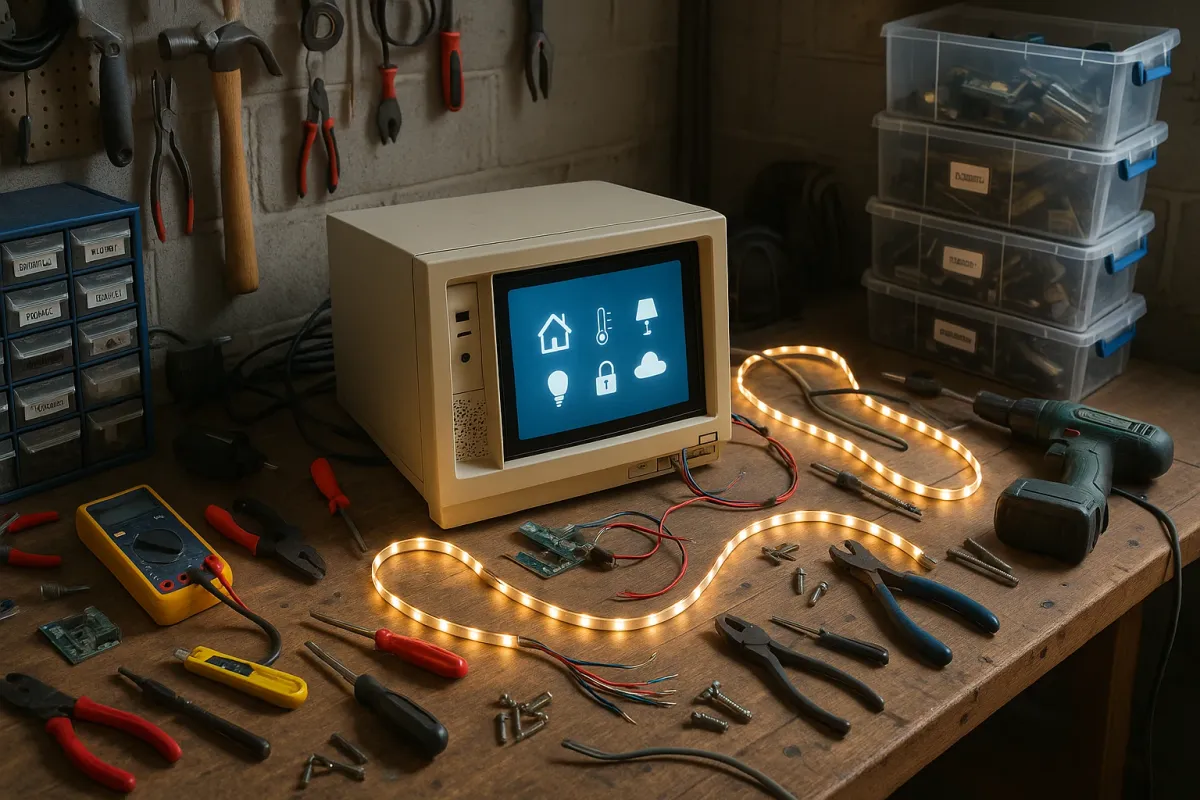
Instead of tossing everything that today’s tech has replaced, you can turn some of it into practical, good‑looking, and even gift‑worthy projects. These ideas are beginner‑friendly, use tools you probably already have, and help keep a few more things out of the landfill.
Below are five step‑by‑step ways to give your “obsolete” stuff a 2025 upgrade—no special skills required.
DIY Charging Station From Old Shoeboxes and Cables
Tech brands keep changing charging ports, which means many of us now have a mess of extra cables and power bricks. You can turn that chaos into a neat, hidden charging station using an old shoebox or small storage box.
You’ll need:
- A sturdy shoebox or gift box with lid
- Power strip
- Craft knife or scissors
- Washi tape, contact paper, or paint (optional for decorating)
- Zip ties or twist ties
Step-by-step:
Plan cable exits
Decide how many devices you usually charge. Mark that many small rectangles (about ½" x 1") along one side of the box where cords will peek out.
Cut openings
Use a craft knife or scissors to carefully cut the rectangles. Sand or trim rough edges if needed.
Add power strip
Place the power strip inside the box with the main cord exiting from the back. If needed, cut a larger hole in the back for the main cord.
Tidy the cords
Plug in your chargers, label them with tape if you like, and bundle excess cable length with zip ties. This keeps them from tangling.
Decorate the box (optional)
Wrap the box in contact paper, paint it, or cover it with fabric. This turns a tech tangle into something you’re happy to leave on a counter.
Start using it
Thread each cable through its exit slot. Close the lid, plug the power strip into the wall, and you’ve got a sleek, DIY charging hub made from “obsolete” cables and a box you were going to recycle anyway.
CD & DVD “Obsolete Art” Wall Decor
Streaming may have replaced physical media, but those shiny old CDs and DVDs still have one huge advantage: they look amazing as light‑catching decor. Instead of letting them gather dust, turn them into modern wall art.
You’ll need:
- Old CDs or DVDs
- Strong glue (hot glue, E6000, or craft glue)
- Cardboard, foam board, or an old picture frame backing
- Ruler and pencil
- String or picture-hanging hardware
Step-by-step:
Design your pattern
Lay your discs on a table and experiment with shapes: circles, waves, a simple grid, or a sunburst. Take a quick photo of your favorite layout so you don’t forget it.
Prepare the backing
Cut cardboard or foam board to the size you want. If you’re using an old frame, remove the glass and use the backing only.
Mark a guide
Lightly draw a center line or grid so you can keep your discs straight and evenly spaced.
Glue the discs
One by one, glue the CDs/DVDs in place following your layout photo. Press firmly for a few seconds each time so they set flat.
Let it cure
Allow the glue to fully dry—check the bottle directions for curing time. This prevents discs from slowly sliding out of place.
Add hanging hardware
Tie a string across the back or attach picture-hanging hooks. Make sure it’s balanced and secure.
Hang and enjoy
Place your new DIY art where it can catch natural or lamp light. You’ve just turned obsolete tech into genuinely eye‑catching decor.
VHS or Cassette Cases Into Phone Stands & Storage
That trending “obsolete things” conversation keeps mentioning VHS and cassette tapes. If you still have the plastic cases, they make surprisingly sturdy and nostalgic organizers and stands.
You’ll need:
- Empty VHS or cassette tape cases
- Craft knife (for VHS)
- Contact paper, paint markers, or stickers (optional)
Step-by-step:
Clean the cases
Remove old paper inserts and wipe the plastic with a damp cloth to get rid of dust or sticky residue.
For a phone stand (VHS case)
- Open the case flat. - Gently bend it backward until it forms a stable “L” shape or small easel. - If needed, cut two small notches on the lower inner edge to create a ledge where your phone can rest.
For a small‑item organizer (cassette case)
- Open the case and flip the lid completely back so it forms a tiny tray. - Use it for paper clips, earbuds, SD cards, or sewing needles.
Decorate the outside
Use contact paper or stickers to match your room style—retro neon, minimal white, or even faux wood.
Label the spine
Write “Cables,” “Keys,” “SD Cards,” or “Receipts” on the spine. When they’re on a shelf, you’ll know exactly what’s inside.
Put them into service
Keep the phone stand near your desk or kitchen counter for easy recipe viewing and the mini organizers in a drawer to tame tiny clutter.
Old T-Shirts Into Reusable “Unpaper” Towels
As people online share how much the world has changed—from paper maps to GPS, from cable TV to streaming—one thing hasn’t changed: spills. Old, worn T‑shirts can become super‑absorbent, reusable cloths that replace paper towels for many everyday jobs.
You’ll need:
- Old cotton T‑shirts (the softer and older, the better)
- Scissors or pinking shears
- Ruler and fabric marker or chalk
- Optional: needle and thread or sewing machine
Step-by-step:
Flatten the shirt
Lay it on a flat surface, smoothing out wrinkles. Cut off seams and hems so you’re left with flat panels of fabric.
Mark your rectangles
Use a ruler to mark towel sizes—about 8" x 8" or 10" x 10" works well. Mark with fabric chalk or a pen.
Cut the cloths
Cut along your lines. Pinking shears (the zigzag scissors) help reduce fraying, but regular scissors are fine.
Finish the edges (optional but stronger)
- Hand sew a simple running stitch around each edge, or - Use a sewing machine with a zigzag stitch along the borders.
If you skip this step, expect some fraying at first—it usually settles after a couple of washes.
Create a storage system
Roll or fold your new “unpaper” towels and store them in a basket or an old tissue box so they’re easy to grab.
Use and wash
Use them for wiping counters, drying hands, or cleaning spills. Toss used cloths into a small bin or laundry bag and wash with regular towels.
Track your impact
Notice how rarely you reach for disposable paper towels now. That’s money saved and less waste heading to the trash—just from “obsolete” shirts.
Repurpose Old Jars Into a Zero‑Waste DIY Tool Kit
From jam jars to pasta sauce bottles, glass containers might feel old‑school compared to squeeze pouches and single‑use packaging. But right now, with so much talk about how quickly products become “obsolete,” glass jars are quietly becoming a hero in zero‑waste DIY.
You’ll need:
- Clean glass jars with lids (any size)
- Goo remover or oil for sticky labels
- Permanent marker or label maker
- Basic DIY supplies: nails, screws, rubber bands, push pins, etc.
Step-by-step:
Clean and de‑label
Soak jars in warm, soapy water to loosen labels. Use oil (like olive or coconut) and baking soda to gently scrub off any adhesive left behind.
Sort your small items
Gather all those floating DIY bits: screws, wall anchors, nails, picture hooks, command strips, rubber bands, twist ties, extra Allen keys from flat‑pack furniture.
Assign each jar a category
Examples: “Nails – Small,” “Hooks & Hangers,” “Picture Hardware,” “Furniture Tools.” Be specific so you don’t have to dig later.
Label clearly
Use a permanent marker directly on the glass or make simple paper labels taped on. Face labels to the front when you store the jars.
Create a “grab & go” kit
Fill one jar with your absolute essentials: a few screws, wall plugs, nails, and hooks. When a small job pops up, you can grab that one jar instead of a whole toolbox.
Store smart
Keep the jars in a crate, shoe box, or on a single shelf. Clear glass means you can see contents at a glance, which makes DIY jobs faster and less frustrating.
Keep it updated
When you finish a project, toss leftover hardware into the right jar immediately. Over time, you’ll build a personalized, zero‑waste DIY hardware store at home.
Conclusion
The current wave of “obsolete things” nostalgia is more than just a fun scroll—it’s a reminder that what looks outdated can still be incredibly useful. Old CDs become wall art, VHS cases become phone stands, T‑shirts become reusable towels, and random hardware turns into an organized DIY station.
You don’t need a workshop, fancy tools, or a big budget to start. Pick one drawer of “obsolete” stuff, try one of these projects, and let yourself experiment. Every time you turn something old into something useful, you’re not just saving money—you’re proving that, in your home at least, almost nothing has to be obsolete.