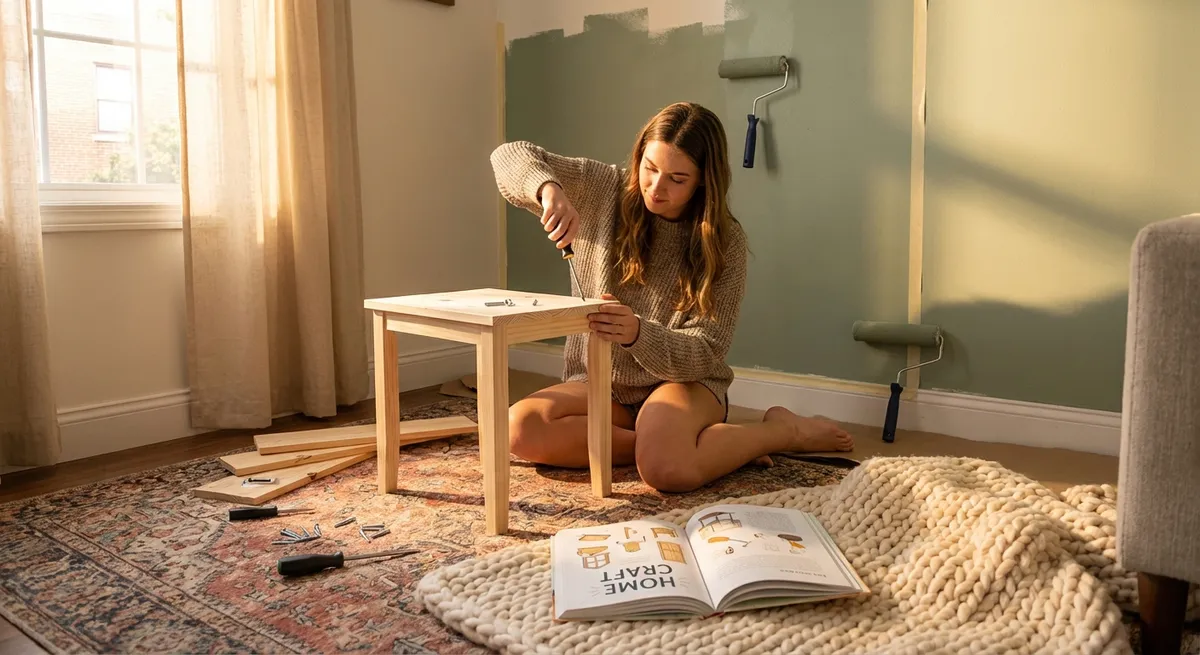
Below are five beginner-friendly DIY projects anyone can try. Each one is designed to be low-stress, low-cost, and satisfying to finish in a single afternoon or less.
1. Create a “Grab-&-Go” Entry Station (So You Stop Losing Your Keys)
A simple entry station keeps your most-used items in one place and cuts down on daily frustration.
What you’ll need:
- A small basket, tray, or shallow box
- A few hooks (adhesive or screw-in)
- A notepad or small whiteboard (optional)
- Command strips, nails, or screws
Step-by-step:
- Pick the exact spot. Stand where you usually come in (front door, back door, garage). The best place is within arm’s reach of where you naturally drop stuff.
- Mount 2–4 hooks at eye or shoulder height. Use adhesive hooks if you’re renting or don’t want to drill. These are perfect for keys, lanyards, lightweight bags, and masks.
- Place a tray or basket under the hooks. This becomes the landing zone for wallet, sunglasses, earbuds, and loose change. Even a repurposed baking pan or shoebox lid works.
- Add a “note zone.” Stick a small whiteboard or notepad on the wall or inside the door for reminders like “Take the returns” or “Mail the letter.”
- Do a 10-second reset every night. Before bed, hang keys, drop wallet, and clear out anything random that ended up there (receipts, trash).
Over a week or two, you’ll train your brain: keys go on the hook, wallet in the tray. That tiny habit saves you time and stress every morning.
2. Turn an Empty Jar Into a Mini Tool Kit (So You’re Always Ready for Fixes)
Instead of hunting for tools in five different drawers, build a compact DIY kit you can grab in seconds.
What you’ll need:
- One sturdy jar, tin, or small box with lid
- Small screwdriver (or a multi-bit screwdriver)
- Measuring tape
- A few nails, screws, and wall anchors
- A roll of painter’s tape or masking tape
- Optional: small flashlight, extra batteries, super glue
Step-by-step:
- Choose a visible “home base.” A kitchen cabinet, pantry shelf, or laundry room is ideal—somewhere central, not buried in a closet.
- Gather your essentials. Start with the tools you reach for most: screwdriver, tape, small hammer (or rubber mallet if it fits), scissors.
- Sort small items into containers. Use old pill bottles, snack cups, or zip bags to group nails, screws, and hooks. Label with tape and a pen.
- Load everything into your jar or box. Heavier items at the bottom, small containers on top so they’re easy to grab.
- Label the outside clearly. Write “TOOLS” so everyone in the house knows where to find and return things.
Now, when a picture frame tilts or a cabinet knob loosens, you’re ready to fix it in under five minutes instead of giving up because you can’t find a screwdriver.
3. Build a Calm Corner With Stuff You Already Own
You don’t need a whole room to have a relaxing space—just a corner you intentionally set up for rest, reading, or a few minutes of quiet.
What you’ll need:
- A chair, floor cushion, or pile of pillows
- A small table, crate, or stool
- A lamp or string lights
- One or two items that make you feel relaxed (book, plant, candle, sketchbook, etc.)
Step-by-step:
- Pick a low-traffic corner. Aim for a spot that’s away from the TV and main noise, if possible. A bedroom corner, a sunny part of the living room, or near a window works well.
- Set up the seat. Use what you have: a comfy chair, bean bag, or layered pillows and a folded blanket on the floor.
- Add a small surface. A crate flipped upside down, a nightstand, or even a sturdy cardboard box covered with a cloth can hold your drink, book, or phone.
- Fix the lighting. Soft light makes a big difference. A small lamp, clip-on light, or string lights taped or pinned around the corner instantly changes the mood.
- Choose 2–3 “calm objects.” A plant, candle (or battery candle), journal, adult coloring book, or a basket with yarn—whatever says “breathe” to you. Put them in your corner.
Make a simple rule: when you sit in this space, you’re off-duty for a few minutes. No doomscrolling, no replying to emails—just you and something that restores you.
4. Set Up a Reusable Cleaning Caddy (So Quick Cleanups Are Actually Quick)
A small, portable cleaning kit makes tidying faster and less overwhelming, because you’re not stopping every five minutes to find supplies.
What you’ll need:
- A tote, bucket, basket, or old shower caddy
- All-purpose cleaner (store-bought or DIY)
- Microfiber cloths or old T-shirts cut into rags
- Glass cleaner or vinegar + water mix in a spray bottle
- Scrub brush or sponge
- Rubber gloves (optional)
Step-by-step:
- Choose your container. It just needs a handle and enough space to hold your basics. Even a sturdy cardboard box works if you’re careful with liquids.
- Fill with multipurpose products. An all-purpose cleaner, a glass-safe cleaner, and a mild scrub pad can cover most surfaces. Avoid mixing products (like bleach and vinegar) in the same bottle—always keep them separate.
- Pack reusable cloths. Microfiber cloths or old T-shirts save money and reduce waste. Keep a small stack in your caddy and wash them together each week.
- Store it where messes happen. Under the kitchen sink or in a hall closet is ideal, so you can grab it quickly. If you have kids or pets, store it out of reach or use child-safe locks.
- Use the “5-minute sweep” method. Pick one room, grab the caddy, and spend five focused minutes: wipe visible surfaces, spot-clean mirrors, and handle one obvious mess. Then stop. You don’t have to clean the whole house at once for it to count.
This turns cleaning from a huge event into a series of small, manageable wins.
5. Make a Simple Cable Organizer From Toilet Paper Rolls
Tangled cords are annoying, but you can tame them with one of the easiest DIY projects out there.
What you’ll need:
- 5–10 empty toilet paper rolls (or paper towel rolls cut in half)
- A small box or shoebox
- Tape, markers, or labels
- Optional: wrapping paper or fabric scraps for decorating
Step-by-step:
- Collect and clean the rolls. Make sure they’re dry and free of dust. If you’re using a shoebox, check that it closes easily.
- Arrange the rolls inside the box. Stand them upright like little tubes. Pack them snugly so they don’t tip over. You can tape them together for more stability.
- Decorate if you’d like. Wrap the outside of the box or the rolls with leftover wrapping paper or scrap fabric to make it look intentional and fun.
- Label each tube. Use tape and a marker: “Phone,” “HDMI,” “Laptop,” “Headphones,” etc. You can also label by person in the household.
- Roll and store each cable. Coil each cord loosely (avoid tight bends), secure with a twist tie or small rubber band, and slide it into a labeled tube.
Now when you need a specific charger, you’re not digging through a knot of wires—you just grab the right tube.
Conclusion
DIY doesn’t have to mean building furniture or mastering power tools. It can be as simple as creating small systems that make daily life smoother: a place for keys, a corner to breathe, a caddy for quick cleanups, a mini tool kit, and untangled cords.
You don’t have to do all of these at once. Pick one project that feels easiest, finish it today, and actually use it for a week. That small win will give you the confidence to tackle the next one—and, over time, you’ll build a home that quietly supports the life you want to live.
Sources
- U.S. General Services Administration – Choosing and Using Cleaning Products – Guidance on safe and effective use of cleaning products
- EPA – Safer Choice Certified Products – Directory of cleaning products that meet safety and environmental standards
- Mayo Clinic – Stress Management: Relaxation Techniques – Explains how intentional calm spaces and habits can reduce stress
- Consumer Product Safety Commission – Household Chemical Safety Tips – Important safety information for storing and using cleaning supplies at home