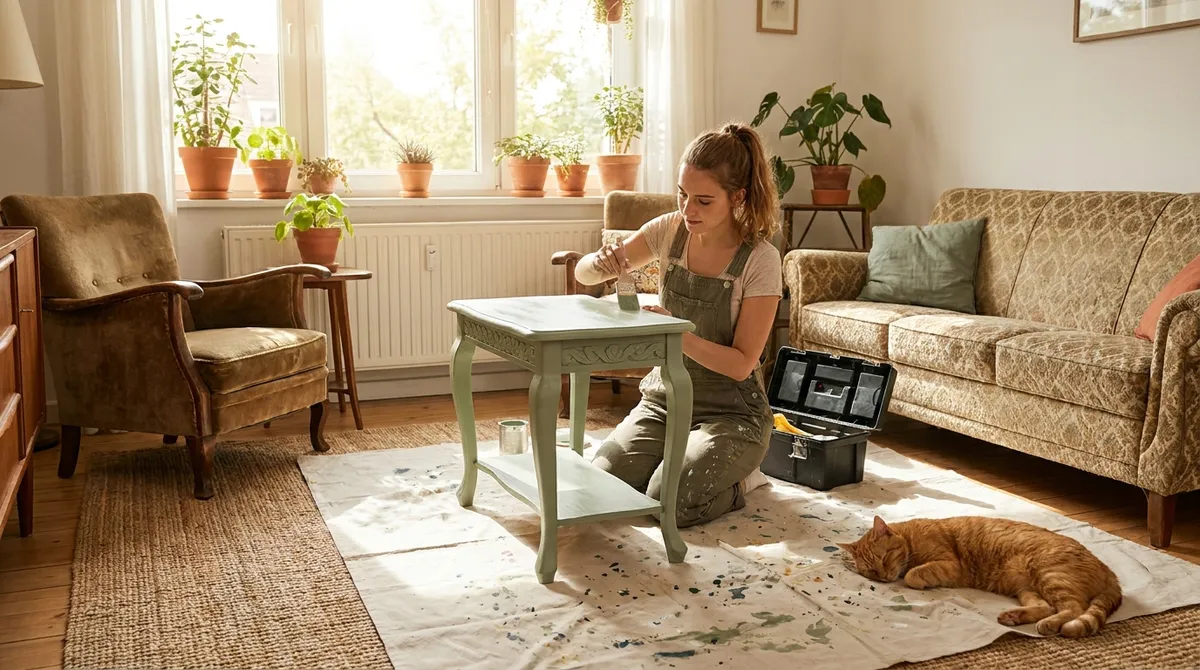
Below are five friendly, low-stress DIY tips anyone can follow, even if you’re starting from scratch.
Tip 1: Hang Anything Straight the First Time (Without Fancy Tools)
Crooked frames and extra nail holes make walls look messy fast. Learning a simple way to hang things straight saves time, frustration, and patchwork later.
What you’ll need
- Tape measure or a school ruler
- Painter’s tape or masking tape
- Pencil
- Hammer and nails or adhesive hanging strips
- Small level (a $3–$5 torpedo level works great) or a level app on your phone
Step-by-step
- Choose your height.
A good rule of thumb: the center of your frame should be about 57–60 inches from the floor, around eye level for most people.
- Mark the frame’s hanging points.
Flip the frame over. Measure the distance between the two hanging points (like D-rings or sawtooth hangers). Cut a piece of painter’s tape to that length and stick it across your frame back, covering both hangers.
- Transfer the tape to the wall.
Peel the tape off the frame and stick it on the wall where you want the frame. Make sure it’s roughly centered at your chosen height.
- Level it.
Place your level on the tape. Adjust one side until the bubble is centered (or use a phone level app). Lightly press the tape to secure it.
- Mark your nail spots.
Use a pencil to mark where each hanger was under the tape (you can poke through the tape or mark the top edge). Remove the tape.
- Install nails or strips.
Hammer nails into your marks at a slight upward angle, or apply adhesive hanging strips according to the package directions.
- Hang and check.
Set the frame on the nails or strips and check with the level one more time. Adjust if needed.
Once you learn this tape trick, hanging multiple frames, mirrors, or wall hooks gets faster and more accurate every time.
Tip 2: Tame Cable Chaos with a Simple Label + Anchor System
Tangled cords make even a tidy room feel cluttered. A few minutes of DIY cable management can calm your space and save you from unplugging the wrong thing.
What you’ll need
- Painter’s tape or masking tape
- Permanent marker
- Velcro cable ties, twist ties, or reusable zip ties
- Command hooks or adhesive cable clips (optional but helpful)
Step-by-step
- Unplug and sort.
Safely power things down. Pull devices forward slightly and gently detangle cords one by one.
- Label both ends.
Write the device name on a small strip of tape (e.g., “TV,” “Lamp,” “Router”). Wrap one label near the plug and another near the device. This alone makes future troubleshooting way easier.
- Shorten long cords.
For extra-long cables, loosely loop the extra length (no tight kinks) and secure with Velcro ties or twist ties. Keep loops soft so you don’t damage the cable.
- Anchor cables to furniture or walls.
Use Command hooks or adhesive cable clips along the back edge of furniture, under a desk, or along a baseboard. Clip cords so they follow a neat path instead of hanging in a messy bundle.
- Create a “charging zone.”
Choose one spot (a tray, small basket, or drawer) and run a power strip there. Label each charging cable (e.g., “Phone,” “Tablet”). This keeps cords from wandering around the house.
- Do a 30-second reset once a week.
Set a tiny reminder to tuck loose cords back into clips or re-wrap ties. Small maintenance keeps the chaos from coming back.
You don’t need special cable organizers to make a big difference—labels plus a few anchors are often enough.
Tip 3: Fix a Wobbly Chair or Table Without Woodworking Skills
That wobbly chair or rocking table doesn’t always need a full repair. Many times you can stabilize it quickly with a few simple steps.
What you’ll need
- Old magazine, cardboard, or thin wood shims
- Sandpaper (medium grit)
- Wood glue (optional)
- Small clamp or heavy books (optional)
Step-by-step
- Find the trouble leg.
Place the chair or table on a flat surface. Gently rock it and see which leg lifts off the floor. That’s usually your culprit.
- Try the quick shim trick first.
Cut a small piece of cardboard or a folded magazine page and place it under the short leg. If it levels out, you know how much height you need.
- Make a neater shim.
Trim a piece of cardboard or a thin wood shim to match the footprint of the leg base. Sand any rough edges if you’re using wood.
- Attach the shim (optional but better).
Add a small dot of wood glue to the top of the shim, press it to the bottom of the short leg, and hold it in place with a clamp or heavy books while it dries.
- Check for looseness.
If the leg is also wiggly where it joins the frame, gently flip the furniture and inspect joints. If you see a slight gap, you can add a tiny amount of wood glue, press the joint together, and clamp or weigh it down while it dries.
- Test again.
Once the glue is dry, set the furniture back upright and test the stability. Repeat with a slightly thicker shim if needed.
This low-tech solution often extends the life of a chair or side table for years with almost no cost.
Tip 4: Create a “Catch-All” Entry Station Using What You Already Have
Instead of hunting for keys, wallets, and mail every morning, give these items a clear home. You can build a simple entry station from things you already own.
What you’ll need
- Small tray, baking dish, or shallow box
- Small bowl, mug, or jar
- Hook(s) or sturdy command hooks (optional)
- Notepad or sticky notes and a pen
Step-by-step
- Pick the best spot.
Choose the place you naturally drop things now—near the front door, by the kitchen counter, or beside the garage door. Working with your existing habit is easier than fighting it.
- Define a “landing pad.”
Place your tray or shallow box there. This is your landing pad for wallet, sunglasses, earbuds, and loose receipts.
- Add a key home.
Put a small bowl, mug, or jar on the tray. That’s where keys live—nowhere else. If you prefer hanging keys, install one or two adhesive hooks on the wall above the tray.
- Tuck in a tiny note station.
Add a small notepad and a pen for quick reminders (“Return library books,” “Grab umbrella”). This keeps sticky notes from migrating all over the house.
- Give incoming mail a rule.
Dedicate a spot on the tray for mail and make a simple rule: open or sort it within 24–48 hours. A vertical file or magazine holder can help if you get a lot.
- Do a weekly reset.
Once a week, quickly empty trash, file receipts, and clear out anything that doesn’t belong. It should take less than five minutes if you keep up with it.
Instantly, mornings get smoother because you’re not running around asking, “Where did I put my keys?”
Tip 5: Boost Any Room with a Quick, No-Paint Refresh
Refreshing a room doesn’t have to involve painting walls or buying new furniture. Small, targeted changes can shift how a space feels in under an hour.
What you’ll need
- Clean cloth or microfiber towel
- All-purpose cleaner (or mild soap and water)
- A bag or box for clutter
- A throw blanket or scarf
- A plant (real or faux) or a bowl/vase you already own
Step-by-step
- Start with “eye-level clean.”
Wipe down everything you actually look at: table tops, nightstands, TV stand, door handles, and light switches. Clean surfaces instantly make a room feel fresher.
- Do a 10-item declutter.
Grab a bag or box. Walk around the room and pick up just 10 items that don’t belong or you don’t love here. Put away, donate, or toss them. If you feel motivated, do another round of 10.
- Re-arrange one small area.
Choose a coffee table, bedside table, or shelf. Clear it completely, wipe it down, then put back only 3–5 items you like. Aim for a mix of useful (coaster, lamp) and pleasant (candle, small decoration, photo).
- Layer in soft texture.
Add a throw blanket over the back or arm of a couch or chair. If you don’t have one, a folded scarf or shawl can do the job. Soft textures make a space feel more finished and cozy.
- Add a simple “living” element.
Place a houseplant, cut flowers in a jar, or even a bowl of lemons on a table or counter. A single natural element makes the whole room feel more intentional.
- Adjust one light source.
Swap to a warm light bulb if your light is very harsh, or angle a lamp to bounce light off a wall for a softer glow. Lighting changes are small but powerful.
You don’t have to overhaul everything—just keep stacking tiny improvements. Over time, these quick refreshes make your home feel more like a place you chose, not just a place you ended up.
Conclusion
DIY doesn’t have to mean major renovations, power tools, or perfectly styled “after” photos. It can simply mean choosing one small frustration—crooked frames, tangled cords, wobbly chairs, chaotic entryways, tired rooms—and giving it 15 focused minutes.
Each project you finish (no matter how small) builds your skills and your confidence. Start with one tip today, pay attention to how much better your space feels, and let that win motivate the next tiny upgrade. Your home doesn’t have to be perfect to support you—it just needs a few doable, DIY-friendly tweaks that feel within reach.
Sources
- Consumer Product Safety Commission – Home Electrical Safety – Guidance on safe use of electrical cords, outlets, and power strips for DIYers.
- U.S. Department of Energy – Lighting Choices to Save You Money – Explains different bulb types, brightness, and color temperature to help with DIY lighting improvements.
- Family Handyman – How to Fix a Wobbly Chair – Step-by-step examples of stabilizing loose and uneven furniture.
- Mayo Clinic – Clearing Clutter for Mental Health – Discusses how tidier, more organized spaces can reduce stress.
- This Old House – How to Hang a Picture – Detailed tips and visuals for safe, accurate picture hanging.