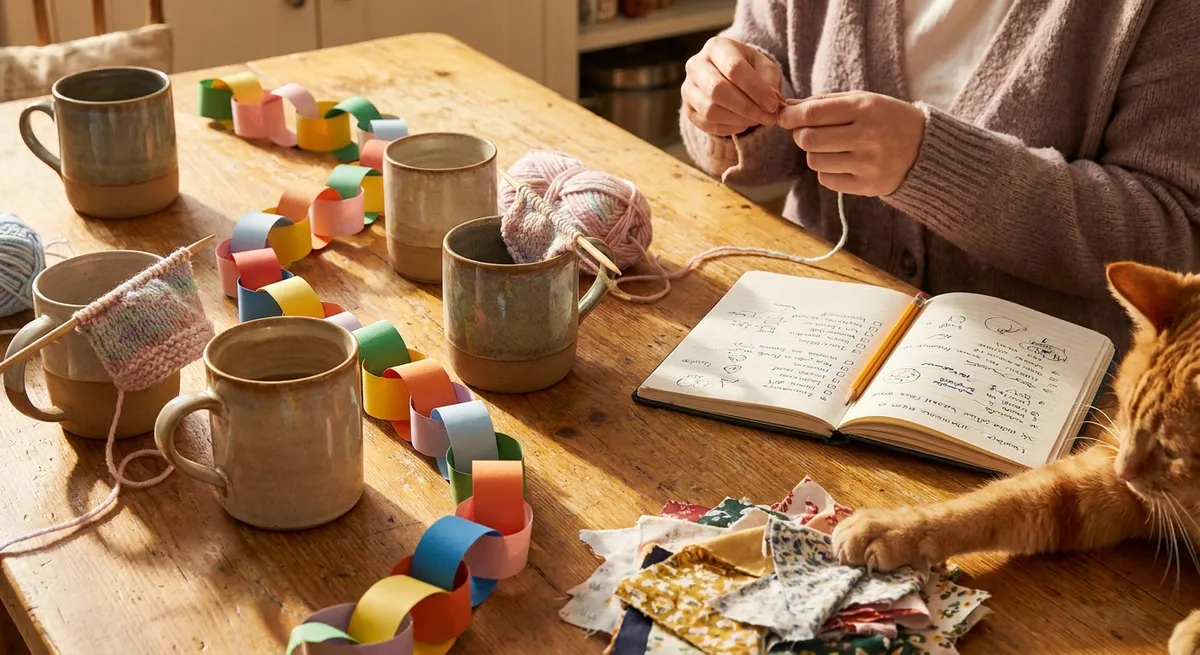
Tip 1: Build a Small, Grab-and-Go Craft Kit
When everything you need is scattered around the house, starting a project feels like a chore. A small, portable craft kit removes that barrier and makes it easy to sit down and create for ten minutes at a time.
What you’ll need (adjust to what you like):
- Small box, pouch, or caddy
- Scissors
- Glue stick and/or craft glue
- Tape (washi or masking tape if you have it)
- Pens or markers
- A few sheets of paper or a small notebook
- Optional: stickers, washi tape, scrap paper, magazine cut-outs, thread, needles
Step-by-step:
- Choose a container that’s easy to grab—shoebox, makeup bag, pencil case, or small basket.
- Gather your basics (scissors, glue, tape, pens). Prioritize tools you actually use.
- Add “instant project” materials like blank cards, small paper scraps, or an old magazine for cutting.
- Keep it light. Avoid overstuffing; too many choices can feel overwhelming.
- Store it somewhere visible—coffee table shelf, nightstand, or desk corner.
- Test it out by making something tiny (a doodled card, a mini collage) to see what you’re missing.
- Adjust over a week—remove items you never touch and add what you kept going back to.
This kit becomes your go-to for quick creative breaks, so you can craft when motivation strikes instead of hunting for supplies.
Tip 2: Turn Scrap Paper into Easy Mini Notebooks
Instead of tossing envelopes, junk mail, or printer scraps, turn them into practical mini notebooks you can use for lists, recipes, or reminders.
You’ll need:
- Scrap paper (backs of printed pages, envelopes, paper bags)
- Scissors or paper cutter
- Stapler, needle and thread, or tape
- Optional: decorative paper, stickers, markers
Step-by-step:
- Collect scrap paper for a few days—anything with at least one blank side.
- Cut the paper into uniform rectangles. Aim for about 3" x 5" or whatever size you like.
- Stack 8–12 pieces together with the blank sides facing the same way.
- Align the edges and tap the stack on a table so it’s straight.
Bind the stack:
- Staple method: Place 2–3 staples along one edge. - Tape method: Lay a strip of tape along one edge, folding it over to hold pages together. - Stitched method: Use a needle and thread to make 3–4 stitches along the edge and tie securely. 6. Create a cover from slightly thicker paper (cereal box, cardstock, or folded paper bag) and wrap it around the pages, attaching it with glue or tape. 7. Decorate the cover with doodles, washi tape, or labels like “Groceries,” “Ideas,” or “To-Do.”
You’ve just turned clutter into something useful, and every notebook is a finished project you can use right away.
Tip 3: Simple Jar Makeover for Instant Storage
Old glass jars are perfect for organizing pens, makeup brushes, or small tools. With a few easy touches, you can transform them into matching, custom storage that looks intentional instead of “leftover.”
You’ll need:
- Clean glass jars (sauce, jam, candle jars)
- Soap and warm water
- Rubbing alcohol (optional, for final clean)
- Acrylic paint or spray paint (optional)
- Twine, ribbon, or fabric scraps (optional)
- Labels or masking tape and a pen
Step-by-step:
- Remove labels: Soak jars in warm, soapy water for 10–20 minutes. Peel off labels and scrub residue with a sponge.
- Clean and dry thoroughly. For painting, wipe the outside with a bit of rubbing alcohol to remove oils.
Choose your finish:
- Clear + simple: Leave the glass clear and just add labels and twine. - Painted: Use acrylic paint on the outside (two thin coats) or spray paint for an even finish. Let dry fully. 4. Add texture: Wrap twine, ribbon, or a strip of fabric around the neck of the jar. Tie a knot or bow and secure with a dab of glue if needed. 5. Label the jar: Use adhesive labels or strips of masking tape. Write what belongs inside (e.g., “Pens,” “Brushes,” “Clips”). 6. Group jars together on a tray, shelf, or desk. Three or more in a row instantly look styled. 7. Fill and adjust. If jars slide around, place them on a small tray or piece of cardboard to keep them grouped.
This small craft tidies your space and makes everyday tools easier to find—all without buying new organizers.
Tip 4: Fabric Scraps into No-Sew Coasters
If you have an old shirt, pillowcase, or fabric remnants, you can turn them into simple coasters without sewing. It’s a quick way to protect surfaces and add color to your table.
You’ll need:
- Fabric scraps (cotton or similar works best)
- Cardboard from a cereal box or shipping box
- Scissors
- Craft glue or fabric glue
- Optional: ruler, pencil, clear sealant (like Mod Podge)
Step-by-step:
- Cut cardboard bases into squares or circles about 3.5"–4" wide. Use a cup or jar as a circle guide if you like.
- Cut fabric pieces slightly larger than the cardboard shape—about ½" extra on all sides.
- Apply glue to one side of the cardboard and press it onto the back of the fabric. Smooth out any bubbles.
- Trim the corners of the extra fabric (at a diagonal) so folding the edges looks neat.
- Fold and glue the fabric edges over the back of the cardboard, working opposite sides first for a tight fit. Press down firmly.
- Optional: Cut a second piece of fabric or paper the exact size of the coaster and glue it to the back to cover the folded edges.
- Let everything dry completely (follow your glue’s drying time).
- Optional: Seal the top with a thin layer of clear sealant to protect from moisture. Let dry before use.
In a short session, you can create a full coaster set. Mix patterns or keep them matching depending on your style and scrap stash.
Tip 5: Ten-Minute Collage Cards for Any Occasion
Handmade cards don’t have to be elaborate. Collage cards are forgiving, fun, and use up your random bits—plus, they’re perfect for birthdays, thank-you notes, or “just because” messages.
You’ll need:
- Blank cards or folded cardstock (you can fold regular paper in half)
- Old magazines, catalogs, or flyers
- Scissors
- Glue stick
- Pen or marker
- Optional: washi tape, stickers, colored paper
Step-by-step:
- Fold your base: If you’re not using a pre-made card, fold a piece of cardstock or printer paper in half to create a card.
- Flip through magazines and tear or cut out anything interesting: patterns, words, shapes, textures, or small photos. Don’t overthink it.
Arrange a simple layout:
- One main image or word in the center - A strip of color or pattern across the bottom or side - One or two small pieces as accents 4. Lay pieces out first without glue, moving them until they feel balanced. Aim for 3–5 pieces per card to keep it clean. 5. Glue from largest to smallest: Glue the biggest background piece first, then layer smaller ones on top. Press flat. 6. Add a handwritten message on the front or inside—short and sincere is enough. 7. Optional: Add details with doodles, borders, or a strip of washi tape. 8. Let dry for a few minutes before stacking or placing in an envelope.
These cards look intentionally artsy, not “perfect,” which takes the pressure off and makes each one unique.
Conclusion
Crafting doesn’t have to be a huge production or a test of your skills. With a small kit ready to go, simple projects like mini notebooks, upgraded jars, no-sew coasters, and collage cards become easy wins you can finish in one sitting. Start with one tip from this list, gather what you already have at home, and give yourself permission to keep it simple. Your projects don’t need to be flawless—they just need to be yours.
Sources
- University of Arkansas Division of Agriculture: Upcycling Ideas - Overview of simple ways to repurpose household items, including jars and containers
- U.S. Environmental Protection Agency (EPA): Reduce, Reuse, Recycle - Background on why reusing materials (like jars, cardboard, and scrap paper) is beneficial for the environment
- Michaels Craft Store Project Ideas - Inspiration and basic how-tos for beginner-friendly craft projects and home décor
- Joann Fabric & Craft: Learn with Joann - Step-by-step craft techniques, including fabric and paper projects suitable for beginners
- CreativeLive Blog: Benefits of Creative Hobbies - Discusses how simple creative activities can reduce stress and boost well-being