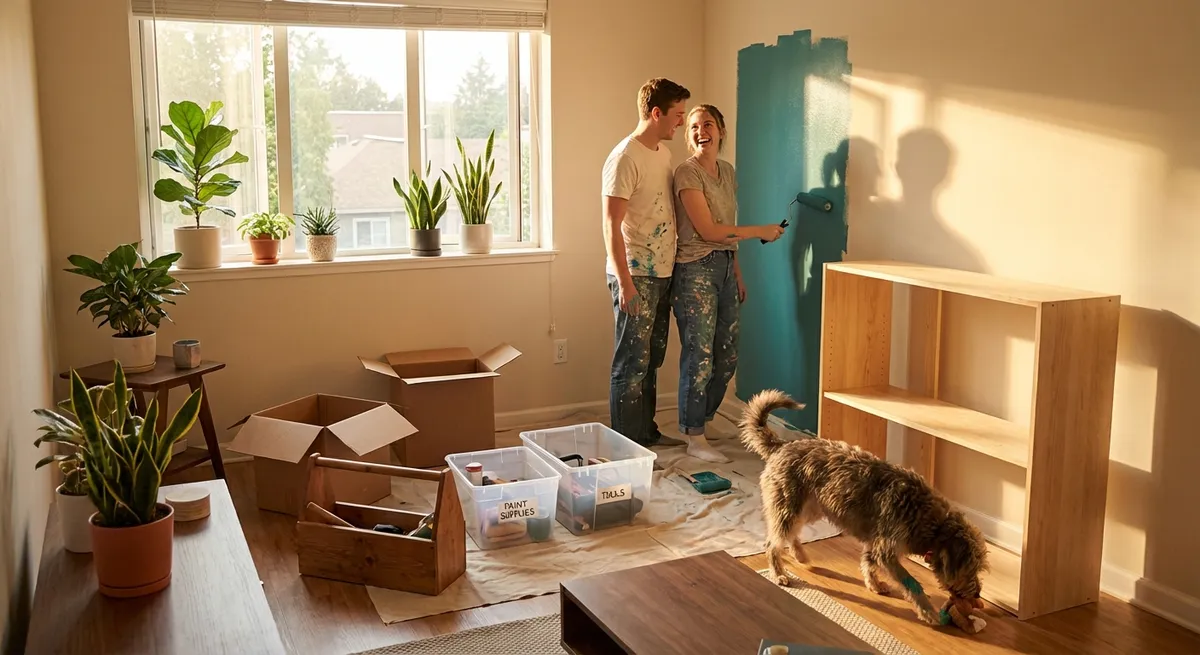
This guide walks you through five approachable DIY tips that almost anyone can follow, with step-by-step guidance to help you avoid common frustrations and see real progress.
Tip 1: Create a “Mini Tool Kit” You’ll Actually Use
Before you dive into projects, set yourself up so getting started doesn’t feel like a chore. A small, intentional tool kit can make every future task easier.
Step-by-step:
- Pick a portable container.
A shoebox, small tote, or handled caddy is enough. The goal: something light and easy to grab, not a huge heavy toolbox you never touch.
- Gather the absolute basics.
Focus on tools that solve everyday problems:
- Phillips and flathead screwdriver (or a 4-in-1 screwdriver)
- Measuring tape (at least 12 feet)
- Hammer
- Utility knife
- Adjustable wrench
- Pliers (basic slip-joint is fine)
- Small level
- Add a mini “fix-it” kit.
- Assorted screws and wall anchors
- Picture-hanging hooks
- Command strips or removable hooks
- Super glue and wood glue
- A roll of painter’s tape
- Choose a home base.
Toss in:
Store your kit somewhere central and easy: hall closet, under the entryway bench, or in the kitchen. If you have to go to the garage or attic, you’ll use it less.
- Label it clearly.
A simple “Home Fix Kit” label reminds everyone in the house where tools live—and where they should go back.
This one-time setup turns future projects from “ugh, where’s the screwdriver?” into “I can fix that in five minutes.”
Tip 2: Start with One “Annoyance Fix” Zone
Instead of trying to “redo the house,” pick a single small area that annoys you daily and improve it. You’ll feel results immediately, which builds momentum.
Step-by-step:
- Choose your zone.
Look for a spot that bugs you at least once a day:
- The entryway where shoes pile up
- The kitchen counter full of mail
- The bathroom where toiletries spread everywhere
- Set a time limit.
Give yourself 30–45 minutes. Knowing you’re not committing a whole day reduces stress.
- Empty the area completely.
Clear the surface, shelf, or corner. Put everything in a laundry basket so you’re not wandering the house putting items away one by one.
- Clean as you go.
Wipe down the surface, sweep or vacuum the floor, and quickly dust nearby areas. A clean base instantly upgrades the space.
- Add one simple organizing “upgrade.”
Use what you have before buying anything:
- Entryway: a tray or shallow box for keys and mail, a basket for shoes
- Kitchen: one box for mail/bills, one small container for pens and scissors
- Bathroom: a spare basket, shoebox, or container for daily-use items
- Put only essentials back.
Ask: “Do I use this here at least once a week?” If not, it goes elsewhere, into donation, or into a “decide later” box you’ll revisit.
You just completed a real home project: you identified a problem, designed a solution, and executed it. That’s exactly how bigger DIY projects work—just on a larger scale.
Tip 3: Learn Safe Drilling with a Low-Stakes Wall Project
Hanging items on walls is one of the most useful DIY skills—and easier than it looks once you understand the basics. Start with something light and low-risk, like a small picture frame or decorative shelf.
Step-by-step:
- Pick a practice spot.
Choose a less-visible wall (hallway, closet, or behind a door) so you’re not stressed about making everything perfect.
- Mark your spot correctly.
- Use a measuring tape to find approximate height. Eye level is usually around 57–60 inches from the floor for artwork.
- Lightly mark the spot with a pencil—you can erase it later.
- Find a stud (or use anchors).
- For heavier items, use a stud finder or gently knock along the wall—studs sound solid, empty areas sound hollow.
- If there’s no stud where you want to hang, use a drywall anchor rated for the weight of your item (the package will list this).
- Drill safely.
- Wear safety glasses.
- Use a drill bit that matches your anchor or screw size (the package often suggests a size).
- Hold the drill level and let it do the work—don’t force it.
- Insert anchor or screw.
- If using an anchor, gently tap it into the hole with a hammer until it’s flush.
- Then add the screw, leaving the head sticking out slightly so your picture or shelf can hang on it.
- Hang and adjust.
Hang your item, step back, and check if it’s level. If not, use your small level and adjust. Tiny tweaks are completely normal.
After doing this once, hanging hooks, shelves, and frames becomes a five-minute job instead of a “someday” project.
Tip 4: Refresh a Tired Room with Paint—Without Painting Everything
Painting an entire room can feel intimidating, but you don’t have to repaint four walls to make a big visual impact. A small, focused paint project lets you practice the skill and see a major change.
Choose one of these mini paint projects:
- Paint just a single accent wall
- Paint interior doors in a fresh color
- Refresh baseboards and trim
- Update a small piece of furniture (like a side table or nightstand)
Step-by-step for a small paint project (like a side table):
- Gather supplies.
- Small foam or bristle roller
- Angled paintbrush
- Painter’s tape
- Sandpaper (120–220 grit)
- Drop cloth or old sheet
- Primer (optional but helpful)
- Paint (a quart is usually enough for small items)
- Prep the piece.
- Clean it with a damp cloth and mild soap to remove dust and grease.
- Lightly sand glossy surfaces so the new paint can grip better. Wipe off dust.
- Tape and protect.
- Use painter’s tape to protect edges or hardware you don’t want painted.
- Lay down a drop cloth or old sheet to protect the floor.
- Prime if needed.
- For raw wood, dark colors, or shiny surfaces, apply a thin coat of primer and let it dry according to the instructions.
- Paint in thin coats.
- Start with edges and tricky areas using the brush, then use the roller on flat surfaces.
- Let the first coat dry fully before adding a second. Thin coats look smoother and last longer than one thick coat.
- Remove tape and let cure.
- Peel off painter’s tape before the paint fully hardens to avoid peeling.
- Allow the piece to cure (often 24–48 hours) before heavy use.
You’ll end up with a fresh, custom-looking piece—and more confidence for larger painting projects later.
Tip 5: Build a Simple “Maintenance Monday” Routine
DIY isn’t just about big transformations; it’s also about keeping your home running smoothly. A tiny weekly maintenance habit prevents small problems from becoming expensive repairs.
Step-by-step:
- Pick a fixed time.
Choose a 15–20 minute slot once a week—Monday morning, Sunday evening, or whenever you’re usually at home and not rushed.
- Make a short checklist.
Start with just a few tasks:
- Test smoke and carbon monoxide detectors (monthly)
- Walk around and look for water leaks under sinks
- Clean kitchen and bathroom sink strainers
- Wipe down high-use light switches and door handles
- Check HVAC or furnace filters (replace as needed)
- Keep supplies together.
Store basic maintenance items (filters, batteries, cleaning wipes, a flashlight) in a small bin near your mini tool kit.
- Track what you do.
Use a note on your phone or a sticky note inside a cabinet:
- “Changed air filter – March 3”
- “Tested detectors – April 1”
- Add one seasonal task.
- Spring: clean window tracks and screens
- Summer: check outdoor hoses and faucets for leaks
- Fall: inspect weatherstripping around doors and windows
- Winter: check for drafts and seal gaps
This simple routine turns “home maintenance” from a vague worry into a few intentional minutes each week—and that’s exactly how people who seem “naturally handy” actually operate.
Conclusion
You don’t have to wait until you “know what you’re doing” to start home projects. Building a small tool kit, fixing one annoying area, learning to drill a safe hole, tackling a mini paint project, and creating a simple maintenance routine are all realistic steps you can take right now.
Each of these tips is a skill-builder in disguise. The more you practice on low-pressure projects, the more prepared—and confident—you’ll feel when it’s time to tackle something bigger. Start small, celebrate every win, and remember: every skilled DIYer you know started with one first project, just like this.
Sources
- [U.S. Department of Energy – Home Weatherization Tips](https://www.energy.gov/energysaver/weatherize/air-sealing-your-home) - Practical guidance on sealing drafts and improving energy efficiency, useful for seasonal maintenance tasks.
- [Consumer Product Safety Commission – Smoke Alarm Safety](https://www.cpsc.gov/smokealarms) - Official recommendations on testing and maintaining smoke alarms as part of a regular home routine.
- [Home Depot – How to Use a Drill](https://www.homedepot.com/c/ah/how-to-use-a-drill/9ba683603be9fa5395fab9016f91e7c) - Step-by-step instructions and safety tips for beginners learning to drill into walls.
- [Benjamin Moore – How to Paint Furniture](https://www.benjaminmoore.com/en-us/interior-exterior-paints-stains/how-to-advice/interior-how-to-paint-tips/how-to-paint-furniture) - Professional advice on preparing and painting small furniture pieces for a durable finish.
- [Lowe’s – Beginner’s Toolbox Essentials](https://www.lowes.com/n/how-to/essential-tools-for-beginners) - A practical overview of basic tools that are useful for starting a simple home tool kit.