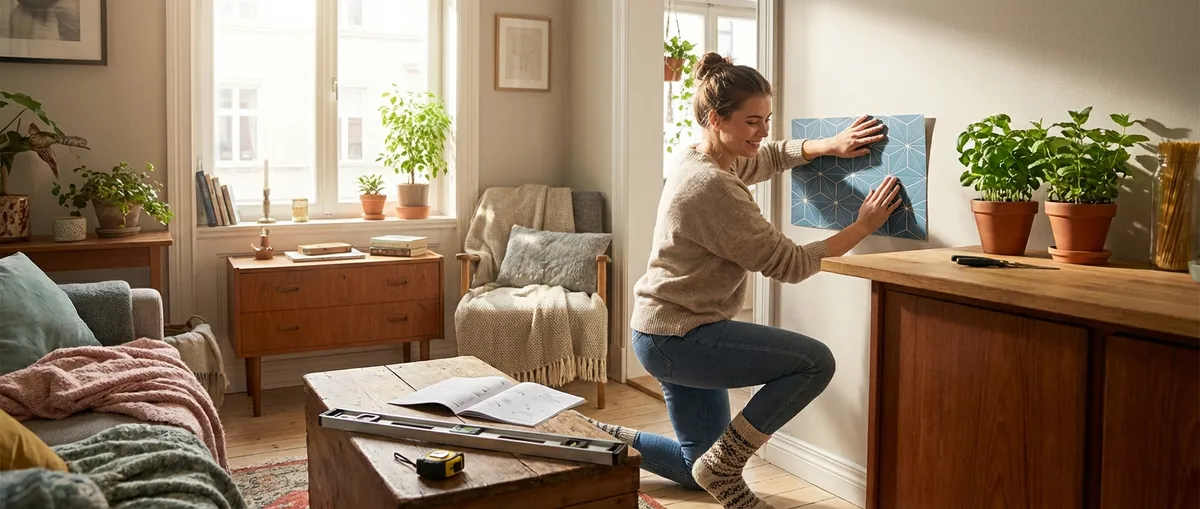
Start with One Small Area, Not the Whole House
When you try to “fix the whole house,” it’s easy to get overwhelmed and quit. Focusing on one small area at a time lets you see progress fast and builds motivation.
Pick something that bothers you regularly: a messy entryway, a cluttered bathroom cabinet, or a dark corner in the living room. Then:
- Define the boundary. For example: “Only the bathroom sink area” or “Just the front door and wall next to it.”
- Set a 30–60 minute timer. This keeps the project from expanding.
- Empty, sort, and wipe. Take everything out, group like items, and give the surfaces a quick clean.
- Decide what earns its place. Put back only what you actually use in that area.
- Add one simple upgrade. Hooks, a small shelf, a tray, or a basket instantly make the space feel intentional.
This “mini-zone” approach turns home projects into a series of small, winnable tasks instead of one huge, impossible makeover.
Build a Tiny Starter Tool Kit (And Learn What Each Tool Does)
You don’t need a full tool chest to handle most basic home projects. A small, well-chosen kit will cover a surprising amount of everyday fixes and upgrades.
Aim to gather these basics over time:
- Tape measure (25 ft): For furniture placement, hanging art, and checking fit before you buy.
- Multi-bit screwdriver (Phillips and flathead): For tightening cabinet hardware, assembling furniture, changing outlet covers, and more.
- Hammer: For hanging pictures with nails and light carpentry tasks.
- Adjustable wrench: For loose nuts, bolts, and basic plumbing connections.
- Stud finder (optional but very helpful): For safely hanging heavy items on walls.
- Level (or a leveling app on your phone): To keep shelves and frames straight.
Once you have these:
- Label or list what each tool is for. A sticky note inside the toolbox works.
- Practice on low‑risk tasks. Tighten a loose cabinet handle, remove and reinstall a switch plate, or hang a light frame.
- Store everything together. A tote, small toolbox, or sturdy shoebox is fine—consistency matters more than looks.
- Add tools slowly as projects demand them. Need to fix a wobbly chair? That’s a good moment to add wood glue or a clamp.
Knowing what your tools do (and where they are) turns “I can’t fix that” into “Let me grab my kit.”
Use the “Measure, Mark, Mock-Up” Method Before You Drill
Holes in the wrong place are one of the most common beginner mistakes. A simple planning process prevents a lot of frustration and patchwork later.
When hanging shelves, curtain rods, or artwork:
- Measure.
- Use the tape measure to find the center of the wall or furniture piece.
- Measure the height from the floor (eye level for most art is around 57–60 inches).
- Mark.
- Lightly mark drill or nail points with a pencil.
- Use a level (or app) to connect your marks and ensure they’re straight.
- Mock-up.
- Tape paper templates to the wall where the item will go.
- Or, hold the item in place and step back to check the position.
- Adjust before committing.
- Move templates until the height and spacing look right.
- Only then drill or hammer.
This method works for gallery walls, TV mounting (following safety guidelines), hooks, mirrors, and more—and it saves you from “Swiss cheese” walls.
Turn Safety into a Habit, Not an Afterthought
Feeling safe makes DIY less stressful and more enjoyable. Basic safety steps are easy once they become routine, and they help protect both you and your home.
Before starting any project:
- Scan for hazards.
- Look for cords, water leaks, wobbly ladders, or clutter underfoot.
- Never use electrical tools near standing water.
- Wear simple protection.
- Safety glasses for drilling, hammering, or sawing.
- Work gloves when handling rough or sharp materials.
- Respect electricity.
- Turn off the breaker before working on outlets, switches, or light fixtures.
- Test the switch or outlet afterward to confirm it’s off before touching wires.
- Read labels and instructions.
- Follow directions for adhesives, paints, and cleaners (especially ventilation and drying times).
- Know your limit.
- Structural changes, gas lines, and major electrical work usually belong to licensed pros.
- If you’re unsure, pause and research or call a professional.
Safety isn’t about being fearful; it’s about being prepared so you can focus on learning and making progress.
Break Every Project into “Today” Steps and “Later” Steps
Many home projects feel huge until you divide them into bite‑size actions. Instead of treating a project like “paint the bedroom,” turn it into a short checklist with clear stopping points.
Take any project and split it like this:
Example: Freshening up a bedroom wall
- Today steps (1–2 hours max):
- Choose a paint color and finish (e.g., washable matte or eggshell).
- Measure wall area to estimate how much paint you need.
- Buy supplies: paint, painter’s tape, roller, tray, brush, drop cloth.
- Later steps (another 1–2 sessions):
- Move or cover furniture, tape edges, and lay drop cloths.
- Cut in edges with a brush, then roll the main wall.
- Remove tape, clean tools, and touch up any misses.
Use this same approach for other upgrades:
- Organizing a closet
- Refreshing a bathroom
- Creating a functional entryway
- Setting up a small workspace
Every time you break a big project into “today” and “later,” you turn something intimidating into something you can actually start—and finish.
Conclusion
Home projects don’t have to be dramatic, expensive, or picture‑perfect to make a real difference. When you start small, keep a simple tool kit, plan before you drill, treat safety as standard, and break tasks into steps, you give yourself permission to learn as you go. Over time, those small wins add up to a home that feels more like it fits you—because you had a hand in shaping it.
You don’t need to be “naturally handy.” You just need a first project, a few basic tools, and the willingness to try.
Sources
- U.S. Consumer Product Safety Commission – Home Safety - Guidance on general home safety practices that apply to DIY projects
- Home Depot – DIY Projects & Ideas - Step-by-step tutorials and beginner-friendly project ideas with tool lists
- Lowe’s – DIY Projects & Ideas - Practical guides for basic home improvement, organization, and decorating tasks
- This Old House – How-To & DIY - Detailed instructions and videos for common home projects and repairs
- Energy.gov – Energy Saver Home Improvement - Tips for safe, energy-efficient upgrades you can do around the home