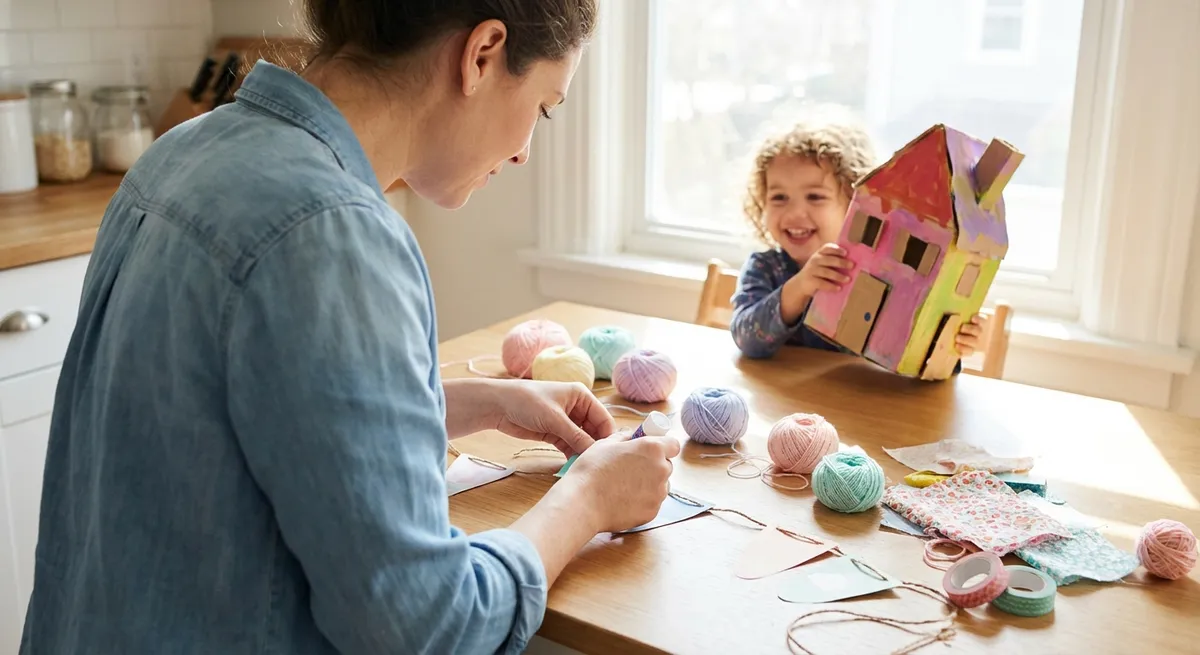
Each of the five tips below walks you through a simple craft, plus variations so you can make it your own.
Tip 1: Turn Old Jars into Cozy Candle Holders
Instead of tossing glass jars, turn them into warm, glowing decor you’ll actually use. This is a great starter craft: flat surfaces, simple materials, and lots of room for “perfectly imperfect” results.
You’ll need:
- Clean glass jars (salsa, pasta sauce, baby food, etc.)
- White glue or Mod Podge
- Soft paintbrush or foam brush
- Tissue paper or thin napkins (plain or patterned)
- Twine, ribbon, or yarn (optional)
- Tea lights or LED candles
Step-by-step:
Prep the jar
Wash and dry the jar completely. Remove as much of the label and adhesive as you can—soak in warm soapy water if needed.
Tear your paper
Rip tissue paper into rough pieces (about 1–3 inches). Uneven edges blend better than straight cuts, so don’t worry about precision.
Apply the glue base
Brush a thin layer of white glue or Mod Podge on a small area of the jar. Work in sections so the glue doesn’t dry before you place the paper.
Add paper and seal
Press a piece of tissue paper onto the glue. Gently smooth it with your fingers, then add another thin layer of glue over the top to seal. Overlap pieces for a stained-glass effect.
Cover the whole jar
Continue around the jar. Don’t worry about wrinkles—they add texture and look nice when lit.
Let it dry
Set the jar upside down on scrap paper or an old plate until it’s fully dry and no longer tacky.
Add finishing touches
Wrap the rim with twine or ribbon and tie a small bow or knot. Place a tea light or LED candle inside.
Make it your own:
- Use white tissue for a frosted look and draw simple designs on top with a permanent marker once dry.
- Try seasonal colors (orange and yellow for autumn, blue and silver for winter).
- Add small pressed leaves or flowers between tissue layers for a botanical look.
Tip 2: No-Sew Fabric Coasters from Scraps
If you’ve got worn-out clothes, an old pillowcase, or leftover fabric, you can turn them into simple coasters—no sewing machine, no special skills.
You’ll need:
- Fabric scraps (cotton works best)
- Cardboard from a cereal box or shipping box
- Scissors
- Pencil/pen
- White glue or fabric glue
- Ruler (optional)
Step-by-step:
Cut your cardboard base
Trace and cut 3–4 inch squares or circles from cardboard. Aim for at least four coasters for a set.
Cut fabric slightly larger
Place a cardboard piece on your fabric and cut a shape that’s about ½ inch bigger on all sides. This extra will fold around the edges.
Glue the front
Spread a thin, even layer of glue on one side of the cardboard. Place it glue-side down onto the wrong side (back) of your fabric and press firmly.
Wrap the edges
Cut small snips in the fabric corners so it folds neatly. Add glue along the cardboard edges on the back and fold the fabric over, pressing down each side.
Neaten the back (optional)
Cut a slightly smaller piece of fabric or felt and glue it to the back to cover the folds and give a clean finish.
Dry and flatten
Place the coasters under a heavy book while they dry to help them stay flat.
Make it your own:
- Use shirt pockets or printed logos for fun statement coasters.
- Combine different patterns in one set (stripes, florals, solids) for a mismatched-but-coordinated look.
- Try round shapes by tracing a mug or small bowl.
Tip 3: Quick Custom Bookmarks from Everyday Paper
If you want a very low-commitment project, bookmarks are ideal: tiny canvas, fast results, and mistakes don’t matter—you can always make another.
You’ll need:
- Cardstock, index cards, or cut-up cereal boxes
- Magazines, old calendars, or patterned paper
- Glue stick or white glue
- Hole punch (optional)
- Ribbon, string, or yarn (optional)
- Pens, markers, or stickers for decorating
Step-by-step:
Cut your base
Cut a strip of sturdy paper or cardboard about 1.5–2 inches wide and 5–7 inches long.
Cover with pattern
Find an image or pattern you like (from magazines, gift wrap, old flyers). Cut it slightly larger than your bookmark base.
Glue and trim
Glue the patterned paper onto the base and smooth it out. Once it’s dry, trim any excess around the edges.
Decorate the top
Add words, doodles, or simple shapes with markers or pens. You can also layer small cut-out pictures or stickers.
Add a tassel (optional)
Punch a hole near the top. Thread a piece of ribbon or yarn through, loop it, and pull the ends through the loop to secure.
Reinforce (optional)
If you have clear tape or self-adhesive laminating sheets, cover the bookmark to make it more durable and spill-resistant.
Make it your own:
- Create “mood” bookmarks with single words like “Focus,” “Relax,” or “Pause.”
- Use paint sample cards from hardware stores as ready-made color palettes.
- Make a matching set and gift them with a book or notebook.
Tip 4: Simple Painted Plant Pots for Instant Color
Plain plant pots can look a bit dull—but a little paint is all it takes to turn them into cheerful accents. This is very forgiving: basic shapes and patterns look great.
You’ll need:
- Terracotta or ceramic plant pots (clean and dry)
- Acrylic craft paint
- Small paintbrushes or foam brushes
- Cup of water and paper towels
- Clear sealer spray (optional but helpful for durability)
Step-by-step:
Clean the surface
Wipe the pot with a damp cloth and let it dry so paint has a clean surface to stick to.
Apply a base coat
Paint the entire outside of the pot in one color. Use thin, even layers; two coats often look better than one thick coat. Let it dry between coats.
Add simple patterns
Using a small brush, add easy designs: dots, stripes, wavy lines, or simple shapes like hearts or triangles. Repeating very simple marks looks surprisingly stylish.
Leave the inside unpainted (for terracotta)
For terracotta, it’s usually best to leave the inside unpainted so the clay can breathe and help manage moisture.
Seal the paint (optional)
Once fully dry, spray a clear sealer over the outside if you want extra protection, especially if the pot will be outside or in a humid spot.
Pot your plant
Add soil and your plant, or use the decorated pot as a cover over an existing plastic nursery pot.
Make it your own:
- Try two-tone pots: paint the bottom half one color and the top rim another.
- Use painter’s tape or masking tape to block off clean geometric shapes.
- Choose a color theme that matches your room and paint several small pots to display together.
Tip 5: Scrap-Paper “Vision Board” Without the Pressure
Vision boards don’t have to be complicated or perfect. Think of this as a low-stress collage: a way to collect images and words that feel good or motivating to you, without overthinking.
You’ll need:
- A piece of cardboard, foam board, or thick paper (any size you like)
- Old magazines, flyers, packaging, or printed photos
- Scissors
- Glue stick or white glue
- Pens, markers, or washi tape (optional)
Step-by-step:
Pick a simple theme
Choose a general feeling rather than a strict goal: “calm mornings,” “creative energy,” “travel dreams,” or “home comfort.”
Collect images and words
Flip through magazines or papers and tear out anything that fits your theme—or just feels nice to look at. Don’t judge it, just gather.
Arrange before gluing
Place your cutouts on the board without glue first. Overlap pieces, try different layouts, and fill in gaps with smaller images or words.
Start gluing in layers
Begin with the largest pieces as your background. Glue them down, then add medium and small cutouts on top. Overlapping gives it a finished look.
Add your own words or doodles
Use markers or pens to add short phrases, dates, or simple drawings in empty spaces. They don’t have to be fancy—handwritten notes give it personality.
Display where you’ll see it
Prop it on a shelf, tape it inside a closet door, or hang it above your desk. The goal is to see it often as a gentle reminder, not to judge whether you’ve “achieved” every image.
Make it your own:
- Create mini boards on index cards or small cardboard pieces and group them (one for work, one for hobbies, one for home).
- Use mostly colors and textures if you’re not into words.
- Update it seasonally: keep the base board and glue new layers on top every few months.
Conclusion
Crafting doesn’t have to be complicated, expensive, or Pinterest-perfect to be worth your time. Small, doable projects like jars turned candle holders, no-sew coasters, or simple painted pots can fit into a single evening and still give you that “I made this” boost.
Start with the project that feels easiest right now, not the one that looks most impressive. Once you finish one small craft, the next one feels less intimidating—and before you know it, you’ll have a few handmade pieces around your home that quietly remind you: you can make things, and they don’t have to be perfect to be meaningful.
Sources
- [Michaels – Craft Ideas & How-To Instructions](https://www.michaels.com/projects) – Step-by-step project ideas and beginner-friendly tutorials for a wide range of crafts.
- [Joann Learning Center – Project Tutorials](https://www.joann.com/how-to-projects.html) – Practical guides for fabric crafts, home décor, and no-sew projects.
- [Plaid Crafts – Painting Tips & Techniques](https://plaidonline.com/learn/how-to-paint) – Basics of using acrylic paint on surfaces like glass, terracotta, and wood.
- [Mod Podge – Beginner Guides](https://plaidonline.com/brands/mod-podge) – Information on using decoupage glue for jars, collages, and other paper crafts.
- [University of Arkansas Cooperative Extension – Creative Use of Household Items](https://www.uaex.uada.edu/life-skills-wellness/personal-family-well-being/personal/creative-activities.aspx) – Encourages low-cost creative activities using everyday materials.