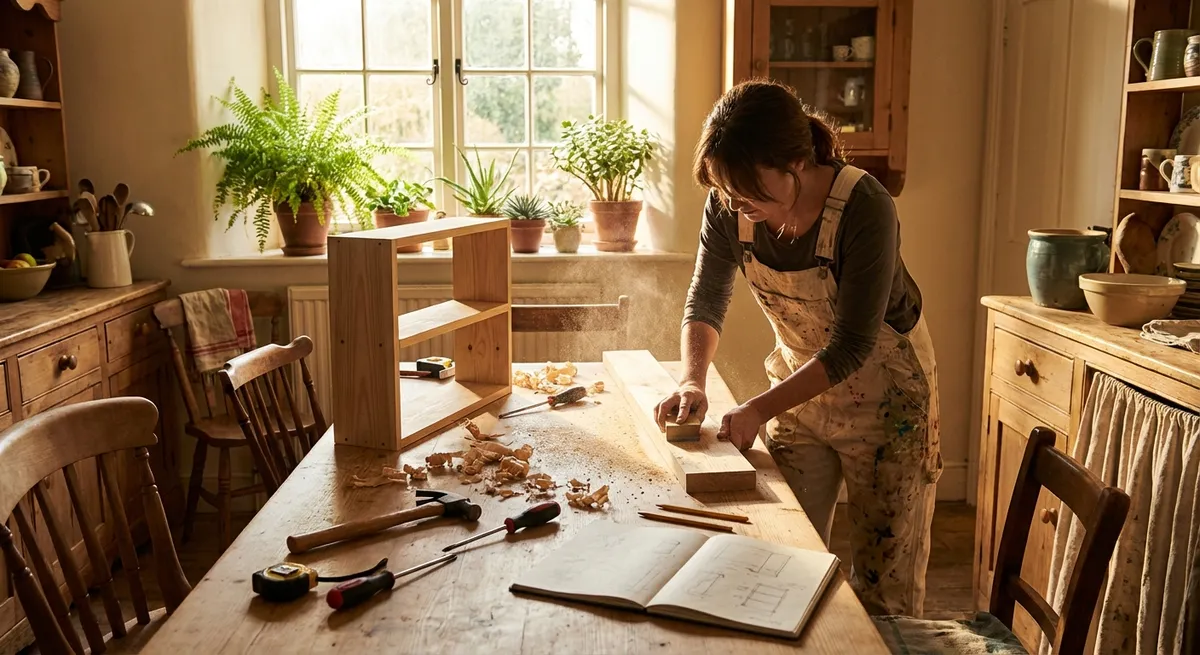
Each of the five tips below comes with clear steps, realistic time estimates, and “don’t panic” notes so you know what really matters—and what doesn’t.
1. Create a Catch-All Entry Tray That Tames Everyday Clutter
If keys, mail, and random receipts seem to scatter the moment you walk in the door, a simple catch-all station can change your whole evening. Instead of “where did I put that?” you’ll have one calm, reliable spot for daily essentials.
What you’ll need (simple version):
- A shallow tray, baking dish, or thrifted plate
- Small bowl or cup (for keys/coins)
- Optional: adhesive felt pads or shelf liner, decorative paper or fabric, clear tape or Mod Podge
Step-by-step:
- Choose your landing zone.
Pick the first flat surface you naturally pass when you come home (a console table, small shelf, or even a windowsill).
- Pick your base tray.
Use what you already have: a baking dish, a sturdy plate, or a low-sided box. Clean and dry it.
- Protect the surface.
Add felt pads to the bottom of your tray, or cut a piece of shelf liner to fit inside. This keeps both tray and furniture from getting scratched or sticky.
- Add simple organization.
Place a small bowl or cup inside the tray for keys and coins. That single container creates a clear “home” for the things you always misplace.
- Optional: personalize.
Line the bottom with wrapping paper, scrapbook paper, or fabric. Secure with double-sided tape or a thin layer of Mod Podge, smoothing out bubbles as you go.
Use-it-right-away tip:
Decide what belongs in the tray (keys, mail, sunglasses) and what doesn’t (dirty dishes, tools, trash). Sticking to that rule keeps it useful instead of becoming another clutter pile.
2. Build a Simple “Repair Basket” So You Actually Fix Things
Loose buttons, small tears, wobbly screws—most people mean to fix them “later” and never do. A tiny, ready-to-go repair basket makes those jobs quick instead of overwhelming.
What you’ll need:
- Small basket, shoebox, or storage container
- Needles and basic thread (neutrals: black, white, gray)
- Safety pins, small scissors
- Assorted screws and wall anchors (or a small repair kit)
- Screwdriver (multi-bit if possible), tape measure
Step-by-step:
- Pick a home base.
Choose a spot that’s easy to remember: under the kitchen sink, on a closet shelf, or in the hallway.
- Gather what you already own.
You likely have a scattered needle, random screws, or a screwdriver. Collect them into your container.
- Fill the gaps simply.
If you’re missing basics, buy a small multipack: assorted screws, small sewing kit, cheap tape measure. You don’t need pro-grade tools—just reliable basics.
- Make fast-access bundles.
- Put sewing items in a small zip bag.
- Put screws and anchors in another.
- Add bandages if you want a tiny first-aid corner too.
- Label it clearly.
Write “Home Repair Basket” or “Fix It Kit” on a piece of tape or paper and stick it to the front. Labeling sounds silly, but it helps you use it instead of forgetting it.
Build-the-habit tip:
Next time you notice a loose knob or a small tear, don’t sigh and walk away. Say, “That’s a 2-minute project,” grab the basket, and fix it immediately. You’ll be amazed by how quickly the “small broken things” list shrinks.
3. Upgrade Any Room With a No-Fail Wall Grouping
Blank walls can make a space feel unfinished. You don’t need designer art or power tools—just a simple system for hanging a few pieces straight and in the right spot.
What you’ll need:
- 3–6 lightweight frames, prints, or even postcards
- Painter’s tape (or masking tape)
- Paper (can be from a grocery bag or old wrapping)
- Scissors, pencil, measuring tape
- Hammer and nails or adhesive hooks/strips (for renters)
Step-by-step:
- Choose your “story.”
Pick items that go together: family photos, travel postcards, favorite quotes, or a mix of colors you love. Matching frames are optional—cohesion comes from spacing and layout.
- Make paper templates.
Trace each frame onto paper and cut it out. Mark where the hanging hardware is on the back (so you know where the nail or hook should go).
- Tape templates to the wall.
Use painter’s tape to arrange the paper shapes. Play with different layouts: a grid, a loose cluster, or a vertical line. Keep spacing roughly equal (about 2–4 inches between frames).
- Check the height.
Aim for the middle of the arrangement to be around eye level (about 57–60 inches from the floor). Step back, adjust, and don’t rush this part—it’s easier to move paper than patch holes.
- Install hardware.
For nails: hammer at the marked spot on each template. For adhesive hooks/strips: follow the package instructions, especially on clean surfaces and wait times.
- Hang the real pieces.
Remove the paper, hang your frames, then tweak by gently shifting them left/right. If you have a smartphone, use the built-in level feature to check straightness.
Confidence tip:
If perfectly straight rows make you nervous, go for an intentionally “casual cluster.” Slightly varied spacing looks intentional and is much more forgiving.
4. Mix a Simple All-Purpose Cleaner From Pantry Staples
Making your own basic cleaner can save money and reduce the number of bottles under your sink. This simple, water-based mix is great for many hard surfaces—just follow the safety notes.
What you’ll need:
- Clean spray bottle
- Water (tap is fine)
- White vinegar
- Mild dish soap
- Optional: a few drops of essential oil (like lemon or lavender)
Important safety notes before you start:
- Do NOT mix this with bleach or products containing bleach.
- Avoid using vinegar on natural stone (marble, granite), as it can etch the surface.
- Always test on a small, hidden spot first.
Step-by-step:
- Rinse the bottle.
If you’re reusing a spray bottle, rinse it thoroughly so old product doesn’t interfere.
- Mix the base.
Add about 1 cup of water and 1 cup of white vinegar to the bottle. (If you dislike strong vinegar smell, use 1.5 cups water and 0.5 cup vinegar.)
- Add a tiny bit of soap.
Add just 3–5 drops of mild dish soap. Too much can leave streaks.
- Optional: scent it.
Add 5–10 drops of an essential oil if you’d like a light scent. Lavender, lemon, or tea tree are popular choices.
- Label the bottle.
Write “Vinegar Cleaner – No Bleach” on a piece of tape and stick it on. This helps you (and anyone else) remember not to mix it with bleach.
- Use it wisely.
Spray on countertops, sinks, appliance exteriors, or bathroom surfaces (avoid stone). Wipe with a cloth or paper towel. For soap scum, let it sit 3–5 minutes before wiping.
Reality-check tip:
The vinegar smell fades as it dries. If it really bothers you, use less vinegar and clean with good ventilation. You’re still getting useful cleaning power from the mild soap and warm water.
5. Give Tired Furniture a New Life With a Simple Hardware Swap
You don’t need to refinish an entire dresser to make it feel new. Swapping drawer pulls or knobs is an easy project that has a big visual payoff.
What you’ll need:
- New knobs or pulls (count how many you need before shopping)
- Screwdriver
- Tape measure or ruler
- Small dish or cup for old screws
- Optional: wood filler and touch-up marker/paint (if you change hole spacing)
Step-by-step:
- Count and measure first.
Count how many knobs or pulls your furniture has. If you’re replacing handles with two screws each, measure the distance between the screw holes (center to center). Take those numbers with you when you shop.
- Choose your style.
Look for knobs or pulls that feel comfortable in your hand and match your room’s vibe: modern, vintage, simple, or bold. Don’t overthink—pick something that makes you smile.
- Remove the old hardware.
Open each drawer and unscrew the back. Keep screws in a small bowl so they don’t disappear.
- Test-fit the new pieces.
Before fully tightening, insert new hardware using the original holes. If the screws are too long, add the included washers or buy shorter screws (hardware stores can help you match size).
- Tighten everything.
Once all pieces fit, go back and tighten them gently. Don’t overtighten—you don’t want to strip the screws or crack the wood.
- Optional: deal with extra holes.
If you changed to a different size (for example, from a long pull to a single knob), fill old holes with wood filler, sand lightly when dry, and touch up with paint or a furniture marker.
Instant-win tip:
Take a before-and-after photo. Seeing the side-by-side difference is a huge confidence boost and a perfect shareable moment if you post your DIY wins online.
Conclusion
DIY isn’t about building a whole house from scratch—it’s about solving small problems, improving daily life, and proving to yourself that you can figure things out as you go.
With these five projects, you’ve:
- Created a calmer entryway
- Set up a repair system that makes “later” turn into “done”
- Made a blank wall feel finished and personal
- Mixed your own cleaner with simple ingredients
- Transformed furniture with a small, satisfying change
Pick one project from this list, set a 30–60 minute window, and start. Once you see what you can do with what you already have, “I’m not a DIY person” starts to sound a lot less true.
Sources
- U.S. Consumer Product Safety Commission – Home Tool Safety Tips – Guidance on using basic tools safely for home projects
- U.S. Environmental Protection Agency – Safer Choice Program – Information about safer cleaning ingredients and products
- Goodwill Industries – DIY Home Décor Ideas – Inspiration for using thrifted items in simple home projects
- IKEA – How to Hang Pictures at the Right Height – Practical tips and visuals for planning wall arrangements
- University of Missouri Extension – Basic Sewing Techniques – Clear explanations of simple repairs like buttons and small tears