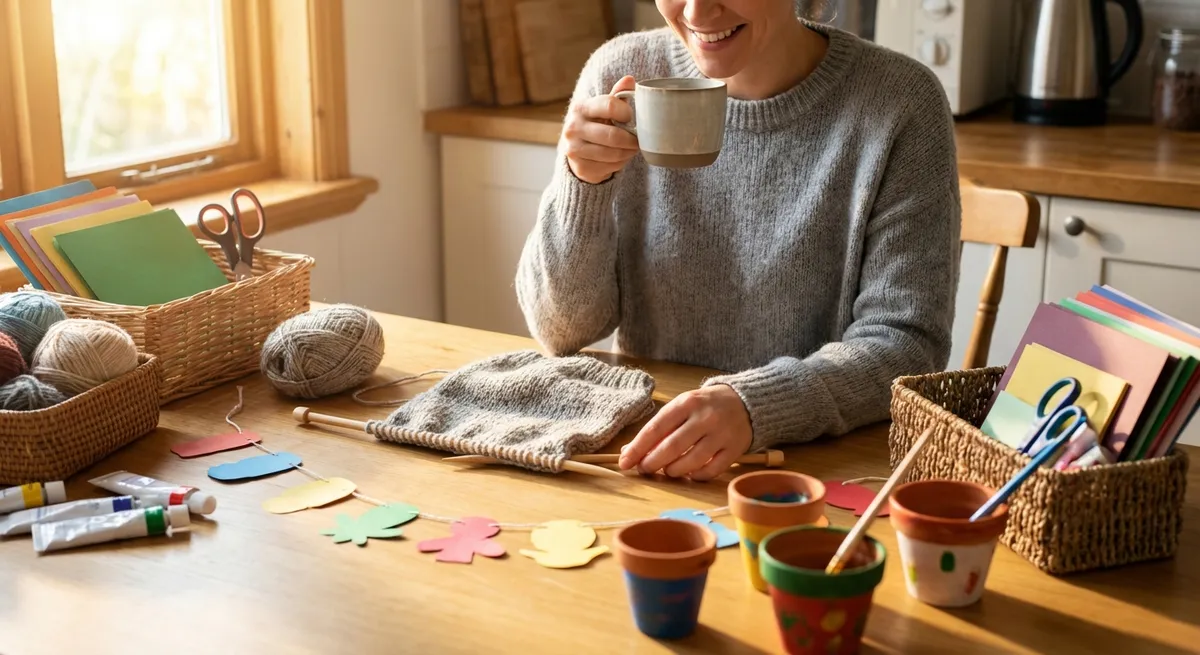
Below are five beginner-friendly DIY craft ideas that are practical, low-stress, and totally doable—even if you swear you’re “not creative.”
1. No-Sew Fabric Coasters From Old Clothes
Got an old cotton shirt or pillowcase? Turn it into everyday coasters and keep your table safe at the same time.
You’ll need:
- Old cotton or linen fabric (shirt, tea towel, pillowcase)
- Scissors
- Ruler or something square to trace (like a coaster or small notebook)
- Fabric glue or all-purpose craft glue
- Pen or chalk for marking
Step-by-step:
- Choose your fabric. Pick a medium-weight fabric that’s not too stretchy—old shirts, napkins, or pillowcases work well.
- Measure and mark. Use your ruler or existing coaster to trace 4–6 squares about 4" x 4" (10 cm x 10 cm). Mark lightly with pen or chalk.
- Cut the squares. Cut carefully so the edges are as straight as possible. Don’t worry if they’re not perfect—you’ll hide small flaws with glue.
- Double up for sturdiness. Cut a second set of squares the same size. You’ll glue two layers together for each coaster.
- Glue the layers. Apply glue across one square, edge to edge. Press a second square on top, lining up the edges.
- Seal the edges. Run a thin line of glue along the outer edge and press gently. This helps prevent fraying.
- Flatten and dry. Place the coasters under a heavy book with baking paper or plastic between to keep things from sticking. Let dry completely (usually a few hours).
Encouragement tip: Start with just four coasters. Finishing a tiny “set” feels like a real win and builds confidence for more projects.
2. Jar-Upcycled Organizers for Pens, Brushes, or Utensils
Instead of tossing glass jars or cans, turn them into simple, coordinated organizers for your desk, vanity, or kitchen.
You’ll need:
- Clean jars or cans (labels removed)
- Acrylic craft paint or spray paint
- Painter’s tape or masking tape (optional, for stripes)
- Paintbrush (if using craft paint)
- Old newspaper or cardboard to protect your surface
Step-by-step:
- Prep your containers. Wash jars or cans with soap and water, remove labels, and dry completely. A bit of leftover glue is fine.
- Protect your workspace. Lay down newspaper or cardboard. Work in a well-ventilated area, especially if using spray paint.
- Tape for clean lines (optional). If you want stripes or color-blocking, add painter’s tape where you want the glass/metal to stay unpainted.
- Paint your base coat.
- With acrylic paint: Brush on a thin coat, let it dry, and repeat until opaque.
- With spray paint: Follow the can directions, using light, even passes.
- Add details (optional). Once dry, you can:
- Paint a simple label area (like a solid rectangle to write on)
- Add dots with a pencil eraser dipped in paint
- Use a permanent marker to write words (“PENS,” “BRUSHES,” “TOOLS”)
- Let cure. Give the paint a full 24 hours to harden before regular use, especially if the container will be handled often.
- Fill and use. Group 2–3 jars together to instantly make your space feel more organized and intentional.
Encouragement tip: Start with a single color theme (white, black, or a soft pastel). Fewer choices = less stress and a more “put-together” look.
3. Simple Ribbon or Yarn Bookmarks (Great for Gifts)
These flat, easy bookmarks are perfect for beginners and make thoughtful, lightweight gifts you can mail in a card.
You’ll need:
- Ribbon, twine, or yarn (not too thick)
- Cardstock or an old greeting card
- Scissors
- Hole punch (or something sharp like a safety pin)
- Optional: stickers, washi tape, markers
Step-by-step:
- Cut the base. Cut a strip of cardstock about 1.5" x 6" (4 cm x 15 cm). Adjust to your favorite size.
- Punch a hole. Add a single hole about ½ inch from the top center. If you don’t have a hole punch, carefully poke through with a safety pin or pointy scissors (go slowly and protect your surface).
- Decorate the strip.
- Add stickers or washi tape
- Write a short quote or word (“Breathe,” “Pause,” “Read”)
- Draw simple shapes—lines, dots, hearts, stars
- Cut the ribbon or yarn. Cut a piece about 8" (20 cm) long.
- Attach the tassel. Fold the ribbon in half, poke the loop through the hole from the front, then pull the two loose ends through the loop and tighten.
- Trim the ends. Even out the tassel so it looks neat.
Encouragement tip: Make a small batch of 3–5 at once. You’ll quickly see how repetition makes each one easier and neater than the last.
4. DIY Citrus-Scented Cleaning Spray Label & Wrap
This one is part craft, part life-upgrade. You’ll create a simple, reusable label and decorative wrap for a homemade cleaning spray so it looks nice enough to leave on the counter.
You’ll need (craft side):
- Plain spray bottle (glass or sturdy plastic)
- Cardstock or thick paper
- String, twine, or ribbon
- Scissors and a hole punch (or sharp tool)
- Permanent marker or pen
- Optional: washi tape or stickers
You’ll need (simple cleaner ingredients):
- White vinegar
- Water
- Citrus peels (orange, lemon, or lime)
- Jar with lid (for infusing)
Step-by-step (cleaner):
- Infuse the vinegar (optional but nice). Add clean citrus peels to a jar, cover with white vinegar, and let sit for at least a few days (up to 2 weeks). Strain when it smells pleasantly citrusy.
- Mix your spray. In the spray bottle, mix half water and half vinegar (infused or plain). Leave some space at the top. Label clearly so no one mistakes it for something else.
Step-by-step (crafty label & wrap):
- Measure your bottle. Wrap a strip of paper around the middle to see how wide and long your “wrap” should be.
- Cut the wrap. Cut a strip of cardstock to that size. It should overlap slightly when wrapped around the bottle.
- Decorate the wrap.
- Write the cleaner name in large letters (e.g., “CITRUS CLEANER”)
- Add simple doodles of lemons or oranges
- Use washi tape to create borders or stripes
- Create a tag label. Cut a small rectangle or tag shape from cardstock, punch a hole at the top, and write “Do not drink” or “All-purpose cleaner” on it.
- Attach everything. Wrap the big strip around the bottle and secure with tape or a small piece of glue. Thread string or ribbon through the tag and tie it around the bottle neck.
Encouragement tip: Even if your handwriting isn’t “pretty,” a clean, simple label and matching colors make the whole thing feel intentional and polished.
5. Framed Scrap Paper “Mini Art” for Bare Walls
You don’t need to paint or draw to make wall art. Using scraps of paper you already have, you can create simple, graphic pieces that look great in a frame.
You’ll need:
- Old magazines, catalogs, gift wrap, or colored paper
- Scissors
- Glue stick
- Plain white paper (printer paper or thicker)
- A frame (thrifted or one you already have)
Step-by-step:
- Choose a color story. Flip through magazines or scrap paper and tear out anything in 2–3 colors you like together (for example: blues + white, or earth tones like browns + creams + greens).
- Cut simple shapes. Cut circles, rectangles, squares, or organic “blob” shapes. Keep them medium to small; they’re easier to arrange.
- Arrange before gluing. Place your white paper on the table and lay shapes on top, moving them around until something feels balanced. Overlapping looks good and hides imperfect cuts.
- Commit and glue. Once you like the layout, glue each piece down, starting with the bottom layers. Press firmly, especially on edges.
- Trim to size. If the edges look uneven, trim the white background paper to fit your frame.
- Frame it. Pop it into your frame, stand back, and appreciate that you just made your own art from literal scraps.
Encouragement tip: Don’t chase “perfect.” Focus on whether the colors and shapes make you feel calm, happy, or intrigued. That’s enough.
Conclusion
Crafting doesn’t have to be an all-day commitment or a test of your artistic skills. Small, useful projects—like fabric coasters, upcycled jars, simple bookmarks, labeled cleaners, and scrap-paper art—can fit into a single evening and still make your space feel more “you.”
Start with one idea from this list and give yourself permission to keep it simple. The real success isn’t a flawless result—it’s proving to yourself that you can start and finish something with your own hands.
Sources
- Creativebug – Beginner Craft Classes - Online classes that demonstrate basic crafting techniques and simple projects for all skill levels
- Michaels – How-To Craft Techniques - Step-by-step guides for painting, paper crafts, and upcycling household items
- Goodwill Industries – DIY & Upcycling Ideas - Practical inspiration for turning old clothing, jars, and other common items into useful crafts
- HGTV – Easy Craft Ideas for Beginners - Visual tutorials and simple, decorative projects that are approachable for new crafters
- University of Arkansas Cooperative Extension – Scrap Crafting Ideas - Tips for using leftover materials and household items in practical craft projects