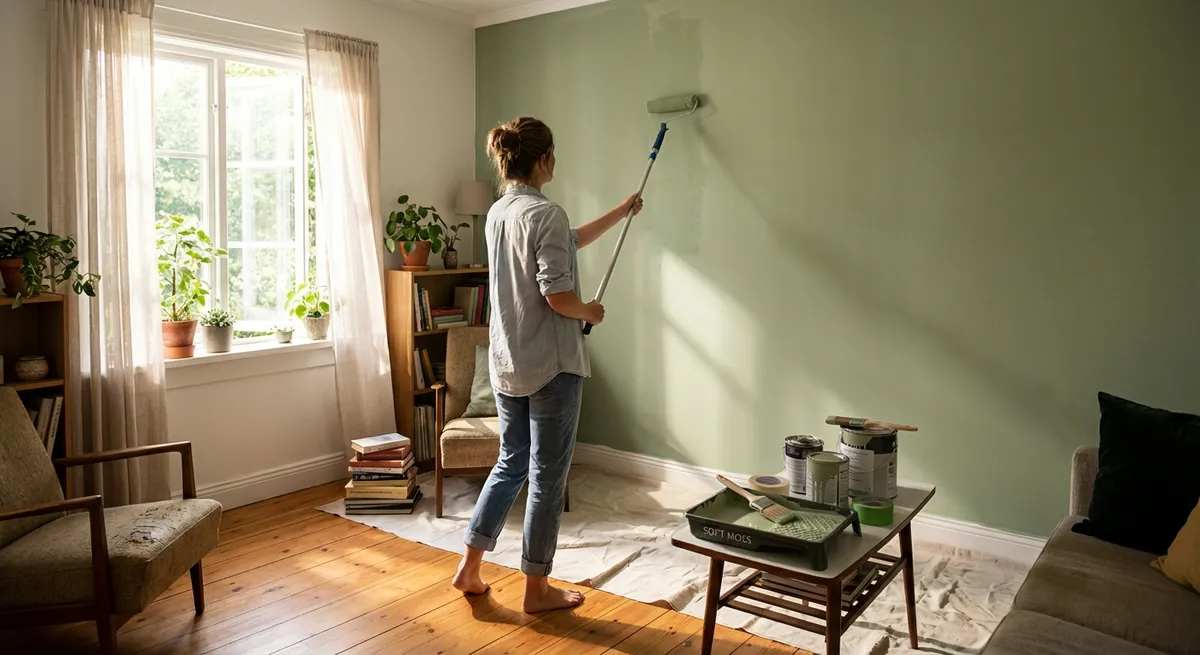
Below are five simple, low-stress DIY upgrades with step-by-step guidance. Each one is beginner-friendly, apartment-safe, and designed to give you a quick “I did that!” win.
1. Create a Grab‑And‑Go Tool Kit So Projects Feel Easier
The easiest way to do more DIY is to make it frictionless. If you have to hunt for a screwdriver every time you want to hang something, you’ll talk yourself out of it. A basic, ready-to-grab tool kit turns “ugh, later” into “okay, five minutes.”
What you need (starter list):
- Medium plastic bin, tote, or toolbox
- Tape measure (16 ft or 5 m)
- Multipurpose screwdriver (with interchangeable bits)
- Small hammer
- Adjustable wrench
- Utility knife
- Assorted picture-hanging kit (hooks, nails, anchors)
- Painter’s tape
- Pencil and notepad
- Safety glasses
Step-by-step:
- Gather what you already own. Check junk drawers, closets, and boxes. Add everything “handy” into a pile.
- Decide on a home base. Choose a single spot: a closet shelf, under-bed bin, or entry cabinet. Consistency matters more than location.
- Sort by use. Essentials you’ll reach for often (screwdriver, tape measure, pencil) go on top or in front.
- Label the container. Use painter’s tape and a marker: “DIY TOOLS.” This sounds basic, but it stops family/roommates from “borrowing forever.”
- Add a tiny project list. On a notepad inside, write 3–5 small fixes you’d like to do (e.g., “tighten wobbly chair,” “re-hang crooked frame”). When you grab the kit, you’ll be reminded.
Encouraging checkpoint: Once this kit is assembled, you’ve already completed your first project. Every future task is easier because you reduced the “set-up” time to almost zero.
2. Fix That Wobbly Chair or Table (Without Special Tools)
Wobbly furniture is annoying but usually easy to fix. In many cases, you’re one Allen key or wood shim away from a solid, steady seat.
What you need:
- Existing tool kit (screwdriver, Allen keys if you have them)
- Optional: wood glue or white glue
- Optional: small wood shims or folded cardboard
Step-by-step:
- Identify what kind of wobble you have.
- Loose joints: Parts move at the connections.
- Uneven legs: One leg doesn’t fully touch the floor.
- Flip the piece gently. Lay it on its side or upside down on a soft surface (towel or blanket) to protect the finish.
- Tighten everything first.
- Use a screwdriver or Allen key to snug all visible screws and bolts.
- Tighten a little at a time and rotate around the piece so you don’t twist it out of shape.
- Reinforce wiggly joints (optional).
- If you see a loose wooden joint, apply a small amount of wood glue into the gap, push the pieces together, wipe away excess, and let it dry as directed on the bottle.
- Level uneven legs.
- Place the furniture upright.
- Slide a folded piece of cardboard under the shortest leg until the wobble stops.
- Use that as a template to cut a cleaner shim from cardboard or a store-bought wood shim.
- Secure with a small dot of glue or double-sided tape if you like.
- Test and adjust. Sit, lean, move side-to-side. Re-tighten any screws that still feel loose.
Encouraging checkpoint: You just rescued a piece of furniture instead of replacing it. That’s budget-friendly and confidence-boosting.
3. Transform a Cluttered Corner into a Mini “Drop Zone”
Every home has a spot where keys, mail, bags, and random objects pile up. Instead of fighting it, turn that chaos into a simple, organized “drop zone” that works with your actual habits.
What you need:
- Small tray, shallow basket, or sturdy plate (for keys & small items)
- Medium basket/bin (for mail or “deal-with-it-later” items)
- Optional: removable hooks or over-the-door hooks (for bags/coats)
- Optional: label maker or masking tape + marker
Step-by-step:
- Pick the true landing spot. Notice where things naturally end up now: near the door, on the kitchen counter, by the couch. Build your drop zone there, not where you “wish” it would be.
- Clear the area completely. Empty that section of counter, table, or wall. Wipe it down so you’re starting fresh.
Assign simple roles:
- Tray: Keys, wallet, sunglasses, earbuds. - Basket: Mail, receipts, takeout menus, small packages. - Hooks (if using): Bags, umbrellas, frequently used coats. 4. Set up and label. - Place the tray and basket where they’re easy to reach but don’t block movement. - Add a label like “Mail” or “Keys & Wallet” if multiple people share the space. 5. Create a 2-minute daily habit. - When you walk in: keys in tray, mail in basket, bag on hook. - Once a day or every other day: sort the basket quickly—trash, recycle, file, action items.
Encouraging checkpoint: You’ve just designed a system that cuts down on the “Where are my keys?” panic. That’s a real, daily payoff for a tiny project.
4. Brighten a Room by Updating Just One Light
You don’t need a full remodel to change how a room feels. Adjusting a single light source—its location, brightness, or color—can shift the whole mood and make tasks easier.
What you need:
- One lamp or overhead fixture you’d like to improve
- New bulb if needed (look for LED, warm white for cozy, cool white for task areas)
- Optional: plug-in floor or table lamp
- Optional: smart bulb or smart plug (for app or voice control)
Step-by-step:
- Pick a problem area.
- A dim corner where you read.
- A kitchen counter where you prep food.
- A workspace where you squint at your screen.
Decide the goal:
- Cozy: Slightly dimmer, warmer light (2700–3000K). - Focused: Brighter, cooler light (3500–4000K). 3. Upgrade the bulb. - Turn off the light and let the old bulb cool. - Replace it with an LED bulb (it saves energy and runs cooler). - Choose brightness (lumens) appropriate for the space: around 450–800 lumens for a lamp, 800–1600 for main lighting. 4. Reposition if possible. - Move a floor or table lamp closer to where you actually sit or work. - Angle the shade so light bounces off a wall or ceiling instead of right in your eyes. 5. Test at different times of day. - Use the light in the evening and again the next morning. - Adjust bulb color or location if it still feels too harsh or too dim.
Encouraging checkpoint: A small lighting tweak can make your home feel more intentional—like it’s supporting your routines instead of fighting them.
5. Add Quick Wall Storage Without Drilling (Renter-Friendly)
If you’re short on space—or your lease doesn’t love holes in the walls—you can still get functional, good-looking wall storage using removable or non-damaging options.
What you need:
- Removable adhesive hooks or strips (rated for the weight you’ll hang)
- Lightweight wire or wooden wall organizer, or fabric wall pocket
- Lightweight frames or clipboards for papers/notes (optional)
- Rubbing alcohol and cloth (for cleaning surfaces)
Step-by-step:
- Choose your clutter category.
- Accessories (hats, scarves, jewelry)
- Kitchen tools (measuring spoons, towels, pot holders)
- Office items (notebooks, bills, cables)
- Find a wall or cabinet side. Look for a vertical surface near where you use those items. Inside cabinet doors, the sides of a pantry, or hall walls are all great spots.
- Clean the surface.
- Wipe with a little rubbing alcohol to remove grease and dust.
- Let it dry completely—this helps adhesive grip better.
- Apply hooks/strips following package instructions.
- Press firmly for the recommended time.
- Wait the suggested “cure” time (often about an hour) before hanging anything.
- Hang your organizer or items.
- For accessories: hang directly on hooks.
- For office or mail: hang a lightweight organizer or clipboard.
- For kitchen: create a mini “tool rail” with hooks for measuring cups, oven mitts, or small utensils.
- Test the weight gradually. Start lighter than the maximum rating and increase slowly. If anything feels loose or wobbly, remove and reapply with fresh adhesive.
Encouraging checkpoint: You’ve just turned unused vertical space into storage, without permanent changes or special tools—perfect for renters and commitment-shy DIYers.
Conclusion
DIY doesn’t have to mean sawdust, blueprints, or a month-long project. It can look like:
- A simple tool kit that makes every future project easier
- One rescued chair that no longer wobbles
- A calm entry area that catches your daily clutter
- A brighter corner that makes reading or cooking more enjoyable
- Wall storage that gives everything a home without damaging your walls
Pick one of these projects and start there. Finishing one small, realistic upgrade is far more powerful than dreaming about a renovation you never begin. Your home doesn’t have to be perfect to feel better—you just have to keep giving yourself these small, doable wins.
Sources
- U.S. Department of Energy – LED Lighting Basics – Helpful guide to choosing LED bulbs, brightness, and color temperatures for different rooms.
- Consumer Reports – Must-Have Tools for Your Home Tool Kit – Covers essential tools worth keeping on hand for common home projects.
- The Family Handyman – How to Repair Loose Chairs – Step-by-step instructions and visuals for reinforcing wobbly wooden chairs.
- Mayo Clinic – Light and Your Sleep – Explains how different lighting types and brightness levels can affect comfort and daily routines.
- Command Brand (3M) – How to Use Command Strips & Hooks – Official guidance on applying and removing removable adhesive products safely and effectively.