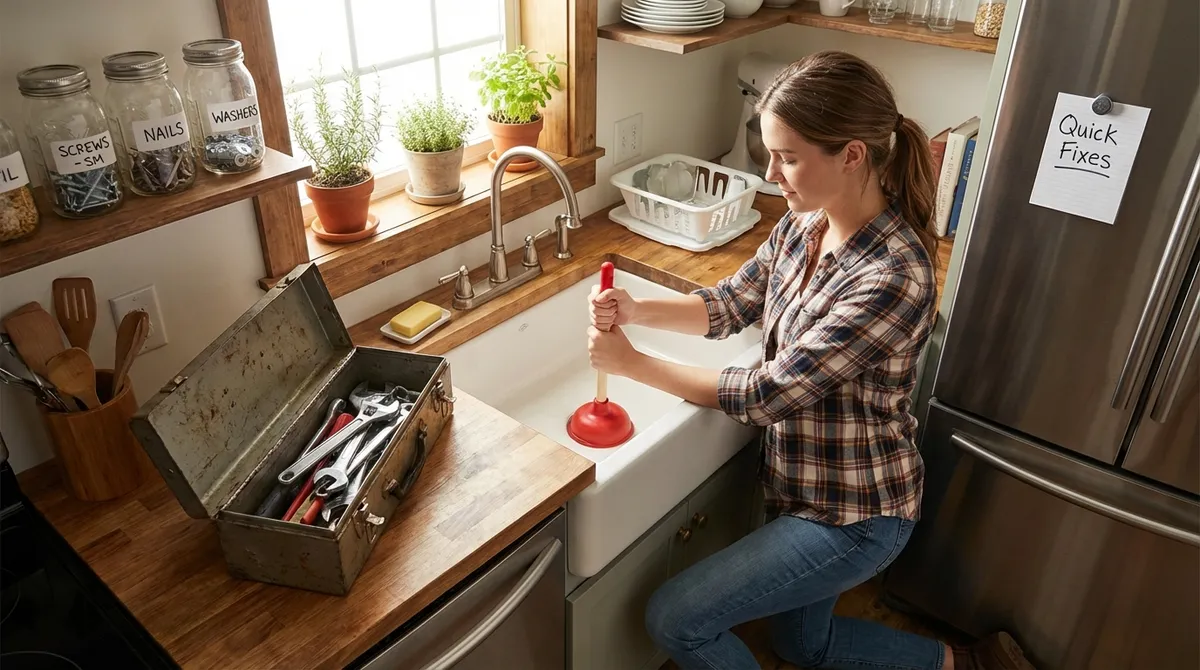
These quick fixes are designed to be low-stress, low-cost, and totally doable—even if you don’t consider yourself “handy.” Let’s turn a few daily annoyances into easy wins.
Stop a Squeaky Door With Pantry Supplies
A squeaky door makes your home sound older and creakier than it really is. You don’t need special tools or fancy lubricants to fix it—your kitchen and bathroom already have what you need.
You’ll need (any one of these):
- Cooking oil (olive, canola, or vegetable oil)
- Petroleum jelly (like Vaseline)
- A bar of soap (plain, unscented works best)
- Paper towel or rag
Step-by-step:
- Open and close the door a few times to confirm which hinge is squeaking.
- Wipe the hinge area with a dry cloth or paper towel to remove dust and grime.
Apply a tiny amount of lubricant:
- If using cooking oil: dip a cotton swab or corner of a paper towel in the oil and dab it along the top of the hinge pin and where the parts move. - If using petroleum jelly: rub a small amount directly onto the moving parts of the hinge. - If using soap: rub the dry soap bar along the hinge joints. 4. Open and close the door repeatedly (10–15 times) to work the lubricant into the hinge. 5. Wipe off any excess so it doesn’t drip or stain the door or frame.
Encouraging note: If it still squeaks a little, repeat the process once more. Even a stubborn hinge usually gives up after a second round.
Rescue a Stuck Zipper With a Simple Slide Trick
Backpacks, coats, and bags always seem to jam at the worst times. Before you force it and break the zipper, try this gentle fix.
You’ll need (choose one):
- Pencil with graphite lead
- Petroleum jelly or lip balm (non-tinted)
- Bar soap or candle wax
Step-by-step:
- Lay the item flat so you can clearly see the stuck part of the zipper.
- Check for fabric caught in the teeth.
- If you see fabric, gently wiggle it loose with your fingers—avoid tugging too hard.
Apply your “zipper lube”:
- Pencil: Rub the graphite tip directly on the zipper teeth around the stuck area (front and back). - Lip balm/petroleum jelly: Use a small amount on a cotton swab and dab only on the teeth, not the fabric. - Soap/candle: Rub lightly along the teeth where it’s stuck. 4. Gently pull the zipper up and down a small amount. Don’t yank—slow, short motions help the lubricant work in. 5. Wipe off excess product so it doesn’t stain clothing or attract dirt later.
Encouraging note: If it moves even a little, you’re winning. Keep using small motions; most zippers unlock gradually, not all at once.
Tame Loose Charging Cables With a Stress-Relief Wrap
Frayed cables are annoying, unsafe, and expensive to replace. You can give your cords a longer life with a simple DIY reinforcement at the weak spots—those bends near the ends.
You’ll need:
- Electrical tape or masking tape
- Optional: a pen spring from an old click pen
- Scissors
Step-by-step:
- Unplug the cable completely for safety.
- Inspect both ends. Look for spots where the outer covering is bending sharply or starting to crack.
If you have a pen spring:
- Remove the metal spring from an old click-pen. - Stretch it gently so it’s slightly longer. - Slide the spring onto the cable and position it near the connector where it usually bends.
Wrap the weak area with tape:
- Start about 1 inch below the connector. - Wrap tightly but not so tight that it distorts the cable. - Overlap each wrap slightly as you move toward the connector. 5. Secure the end of the tape by pressing it down firmly with your fingers.
Encouraging note: This won’t turn a damaged cable brand new, but it can slow down wear and help you avoid those sudden “why won’t this charge?” moments.
Clear a Slow-Draining Sink Without Harsh Chemicals
Standing water in a sink or tub feels gross, but you don’t have to reach straight for heavy-duty drain cleaners. A simple combo of hot water, baking soda, and vinegar can often restore decent flow.
You’ll need:
- Kettle or large pot for hot water
- 1/2 cup baking soda
- 1/2–1 cup white vinegar
- Plug or small plate (optional, for better effect)
Step-by-step:
- Boil a kettle or pot of water.
- Pour hot water slowly down the drain to soften buildup (avoid boiling water on PVC pipes—let it cool for a minute first).
- Add baking soda directly into the drain. Try to get as much as possible into the opening, not around it.
- Pour vinegar on top of the baking soda. You’ll see fizzing—that’s good.
- Optional: Cover the drain with a plug or plate for 10–15 minutes to keep the reaction closer to the clog.
- Flush with more hot water after 15–20 minutes.
- Test the drain. If it’s better but not perfect, you can repeat once more.
Encouraging note: If the sink is totally blocked and this doesn’t help, you may need a plunger or a professional. But for slow drains, this simple routine often makes a big difference with almost no effort.
Make a Quick-Grab “Fix-It” Kit So Future Problems Are Easier
One of the best quick fixes you can do today: set yourself up so the next problem is easier to solve. A tiny, simple kit can turn “ugh, I’ll deal with that later” into “I’ve got this.”
You’ll need (use what you already have):
- Small box, pouch, or tin
- A mini screwdriver or eyeglass repair tool
- A few bandages
- A roll of tape (electrical, masking, or duct tape)
- A few zip ties or twist ties
- A couple of safety pins
- A small notepad and pen or a sticky note pad
Step-by-step:
- Pick a container small enough to fit in a drawer, bag, or glove compartment.
- Gather your basics from around the house—no need to buy new at first. Toss them into the container.
Add “problem-solvers” you personally need often, like:
- Extra hair ties - A spare phone charging cable - A stain-remover wipe - A spare button 4. Label the kit ("Quick Fix Kit," "Everyday SOS," or anything that makes you smile).
Store it where you most often say, “Ugh, I wish I had…”
- Near your front door - In your car - In the drawer you open every day
Encouraging note: The next time your glasses screw loosens, a tag falls off, or something needs a quick patch, you’ll feel quietly proud you set Future You up for an easy win.
Conclusion
DIY doesn’t have to mean big projects, power tools, or entire weekends lost to YouTube tutorials. Sometimes it’s as simple as quieting a squeak, freeing a zipper, or keeping a cable alive for a few more months.
Every small fix you make builds confidence. Start with one of these today—pick the problem that annoys you the most, solve it in a few minutes, and enjoy that tiny but very real feeling of “I handled that.”
Sources
- U.S. Consumer Product Safety Commission – Product Safety Tips - General safety guidance for handling household items and simple repairs
- University of Illinois Extension – Home Maintenance & Repairs - Practical information on basic home care and minor fixes
- Good Housekeeping – How to Fix a Stuck Zipper - Step-by-step methods and safe materials for loosening zippers
- The Spruce – How to Clear a Clogged Sink - Detailed guidance on unclogging drains with and without chemical cleaners
- U.S. Department of Energy – Energy Saver: Electronics and Charging - Background on electronics use and why caring for cables and chargers matters